Let's talk about what actually happens to desire when your relationship changes
You've probably heard that long-term relationships are supposed to have less sex. It's become almost a cliché. But what nobody tells you is that the drop in desire often isn't about the relationship at all. It's about losing touch with your own body.
When a major relationship shift happens—moving in together, having kids, one partner changing jobs, a health crisis, recovering from infidelity, or simply the landscape of your life changing—your nervous system responds. You're suddenly managing new logistics, new emotional weight, new negotiations. Sex becomes something that lives in the background, if it lives there at all.
Here's the thing: that's not a sign your relationship is broken. It's a sign you've been operating in survival mode, and your body has learned to deprioritize pleasure. The good news is that reconnecting with pleasure is absolutely possible. And for many people, it starts solo.
Why desire disappears when the relationship landscape shifts
Three interconnected reasons, none of which involve falling out of love.
Your attention is elsewhere. When relationships change, your cognitive load spikes. If you've moved in together, you're learning a new physical space and someone else's habits. If you've had kids, your nervous system is in protective mode around fragile humans. If there's been a betrayal or conflict, your brain is running threat-detection software constantly. Desire requires mental space. When your brain is hijacked, desire goes quiet.
Your body feels like it belongs to someone else. This is especially true if the relationship shift involved touch changing in ways you didn't anticipate. Maybe your partner suddenly wants more physical affection when you need space, or less when you're craving connection. Maybe you're touched out from parenting or caregiving. Maybe the physical dynamic of the relationship shifted in ways that made your body feel less like your own.
You've learned to filter pleasure through someone else's experience. In long-term relationships, we unconsciously calibrate our pleasure to our partner's rhythm. We notice what they respond to, what they initiate, what they seem interested in. When the relationship dynamic changes, that feedback loop breaks, and suddenly you're not sure what you actually want anymore.
The kicker: none of this means you've lost capacity for pleasure. You've just lost the signal.
Why exploring solo pleasure matters after relationship changes
I work with couples through all kinds of transitions, and the ones who rebuild desire most effectively are the ones who remember that pleasure is a solo skill too.
When you return to your own body without an audience, something shifts. You're not performing. You're not managing someone else's experience. You're not thinking about what happens next or whether this is the right time. You're just you and sensation.
This matters neurologically. Your brain has a pleasure map. When you're in a relationship, that map gets overlaid with a partner map. When you explore solo, you're recalibrating your own circuitry. You're remembering what actually feels good to you, separately from what you've learned your partner responds to.
That might sound selfish. It's not. It's the foundation. You can't authentically share pleasure with a partner until you know what pleasure feels like when it's just for you.
How lemon clitoral vibrators fit into this work
Let's be practical. When desire is low and your nervous system has been dysregulated, the entry back into pleasure often needs to be gentle and highly responsive.
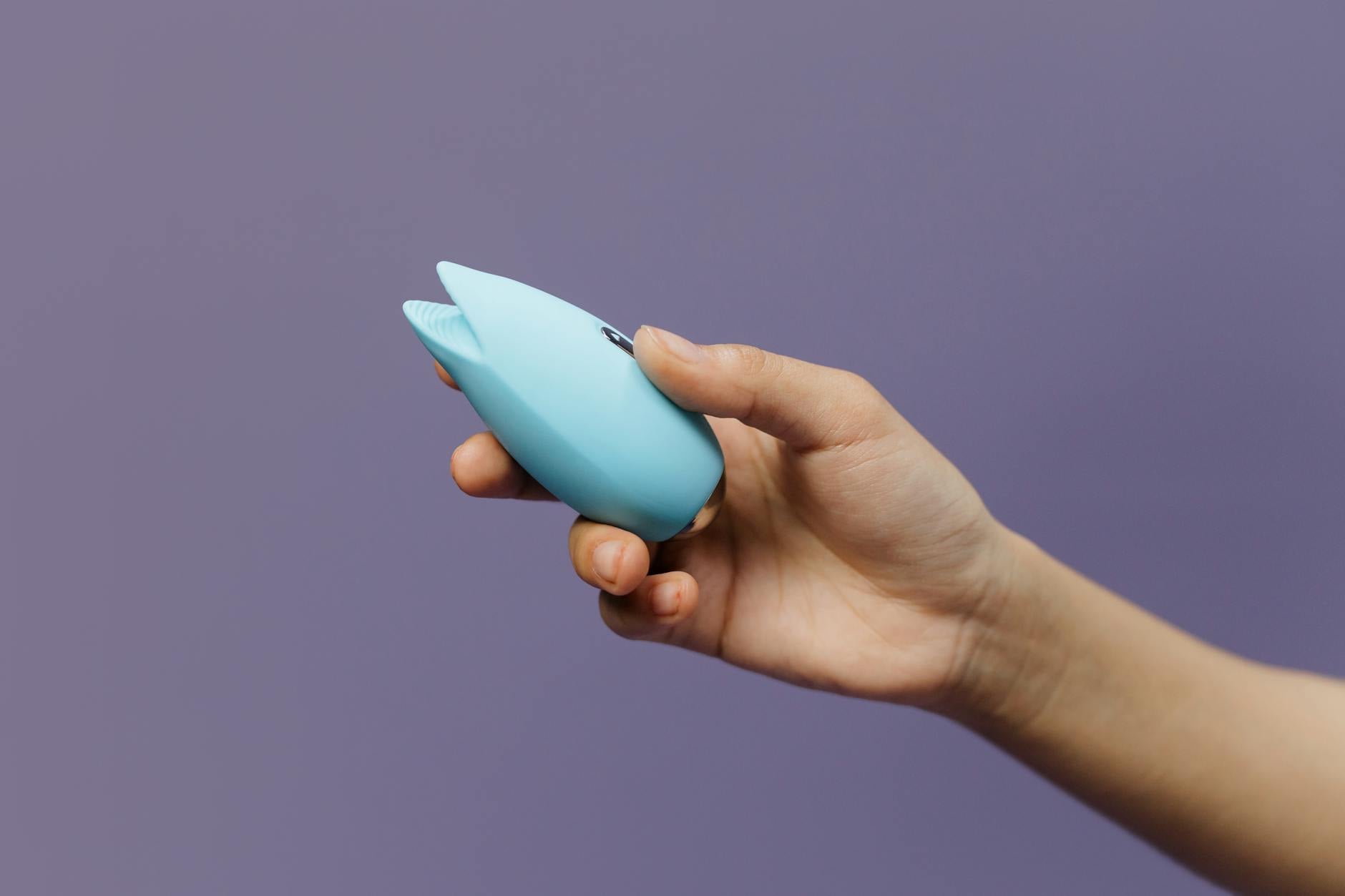
Lemon clitoral vibrators work here because of how suction stimulation functions. Unlike traditional vibration, which requires your body to build momentum gradually, suction creates immediate sensation and direct nerve activation. If your desire is low, that responsiveness matters. You don't have to coax your body into arousal. The sensation is there, now.
For people whose attention has been elsewhere, that immediate feedback loop is helpful. It pulls your attention back into your body. You can't think about the dishes or the emails when your nervous system is receiving strong, clear input.
The Lem and other Hello Nancy lemon sexual toys are also tools you control completely. No negotiation, no timing concerns, no performance pressure. You start when you want, you stop when you want. That control is crucial when you're rebuilding connection with your own desire.
Starting slowly when desire has been absent
Here's what I recommend, and I'm borrowing from my clinical work here.
First, create actual space. Not stolen time between chores. Real, protected time when your nervous system isn't expecting an interruption. Thirty minutes is enough. Your phone is in another room.
Second, no pressure on outcome. You're not trying to orgasm. You're not trying to achieve anything. You're exploring sensation. If you get aroused, great. If you just feel pleasure without climax, that's the whole point. If nothing happens, that's information too.
Third, start with the lowest setting. A lemon clitoral vibrator has different intensity levels for a reason. Pattern 1 or 2 is enough to begin. Your nervous system needs to remember how to receive pleasure. Lower intensity gives you room to actually feel what's happening instead of bracing against stimulation.
Fourth, use lubrication. Water-based lube isn't just practical. It also signals to your body that you're taking care of it. There's something psychologically powerful about that care.
How this translates back to partnered sex
Once you've started rebuilding a solo practice with a lemon clitoral vibrator, the relationship part gets easier.
You know what feels good to you now. You can communicate that. You might use the vibrator together, or you might use it solo while your partner is present. That shift from "I don't know what I want" to "I know what works for my body" changes how you show up in partnered intimacy.
Some couples find that incorporating the lemon suction vibrator into partnered sex helps rebuild the physical connection. Others find that solo practice is enough to shift the dynamic. Both are valid.
The key is that you're no longer waiting for desire to show up. You're actively remembering what pleasure feels like. That's not something that happens passively. It's something you do.
Addressing the guilt piece
I need to say this clearly because I hear it constantly: prioritizing solo pleasure is not selfish. It's not a betrayal. It's not evidence that your relationship is failing.
Long-term relationships require both people to maintain their own sense of pleasure and aliveness. When you abandon that work—when you assume all sexual pleasure should come through your partner—you're actually setting the relationship up to fail. You're creating the conditions where desire dies.
Rebuild your solo practice. Use a lemon clitoral vibrator if it helps. Notice what your body responds to. Let that knowledge inform how you show up with a partner.
Your desire matters. Your pleasure matters. The relationship only gets better when you believe that.
When to talk to a professional
If you've been experiencing zero desire for more than a few months and none of this is shifting even with solo exploration, that's worth discussing with someone. Desire loss can point to depression, unresolved relationship conflict, or medical factors worth investigating.
But for most people navigating relationship shifts, the path back to desire begins with yourself. A lemon clitoral vibrator is just a tool that makes that work easier. The real work is remembering that your pleasure is worth protecting.
People also ask
How long does it usually take to rebuild desire after a major relationship change?
There's no standard timeline, but most people start noticing shifts within 3 to 4 weeks of consistent solo practice. You'll likely notice your body feeling more responsive before you feel a significant uptick in desire overall. Think of it like rebuilding trust with your own nervous system. It takes time, but not as much as you'd think.
Can you use a lemon clitoral vibrator if you're in a monogamous relationship?
Absolutely. Solo pleasure and partnered pleasure are two separate things. One doesn't negate the other. Many people in committed relationships use clitoral vibrators solo specifically to maintain their own sense of pleasure and arousal capacity. It actually supports partnered intimacy rather than competing with it.
Will using a lemon vibrator make partnered sex feel different or inadequate?
You might notice partnered sex feels different after you've reconnected with what strong clitoral stimulation feels like. That's not a bad thing. It's information. You might discover that you prefer a combination of partnered intimacy plus vibrator use, or you might find that knowing what pleasure feels like makes you more present during other forms of touch. Neither outcome is wrong.
What if desire doesn't come back after exploring solo?
If months of solo practice aren't moving the needle on desire, that's worth exploring with a therapist or your doctor. Persistent desire loss can point to depression, relationship issues that need professional attention, or medical factors like hormonal shifts. A Hello Nancy lemon sexual toy is helpful for many people, but it's not a substitute for professional support when something deeper is happening.
Is it normal to feel awkward or uncomfortable when starting to explore solo pleasure again?
Completely normal. Especially if the relationship shift happened partly because you lost touch with your body. That awkwardness usually passes within the first few sessions. Your nervous system is remembering something it hasn't done in a while. That recalibration feels strange. Then it feels natural again.
Can a partner help by using a lemon clitoral vibrator together?
Yes, and for some couples it's actually the entry point that makes sense. If you and your partner are both interested, exploring together can rebuild intimacy and help you both remember what pleasure feels like. Just make sure that solo practice is part of your routine too. Both matter.