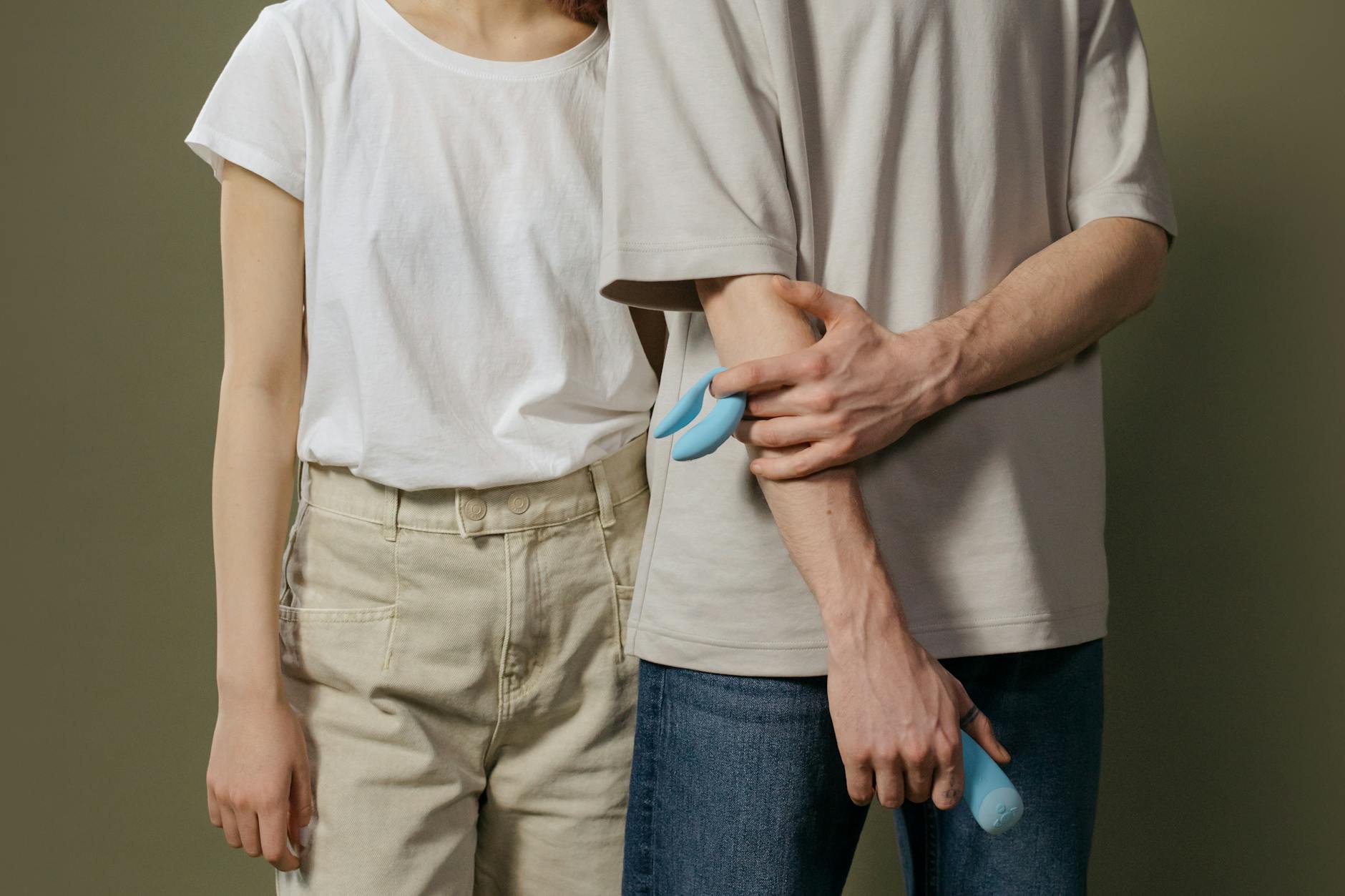
The stall no one wants to name
Years in, and sex became the thing you schedule around errands. Or skip. Or think about avoiding before it gets brought up. That's not a relationship failure. That's what happens when intimacy gets buried under routine, obligation, and the weird shame that accumulates when desire goes quiet.
Here's the thing though: a stall is not the end. It's actually a pivot point.
When couples come to me saying the spark is dead, what they usually mean is the spark changed shape. It's not that you stopped wanting each other. It's that you stopped wanting in the same way at the same time, and neither of you knew how to name that without it feeling like rejection.
Lemon clitoral vibrators and toys from Hello Nancy solve a specific problem that conversation alone can't always fix. They give you a third thing to focus on instead of the weight of expectation. They make pleasure low-pressure again. And weirdly, they often bring back the conversation piece that went missing.
Why desire disappears in long-term relationships
I'll give you the clinical version first, then the real one.
Clinically: novelty drops, neural response flattens, routine replaces spontaneity, stress loads increase, and responsive desire (the kind you feel when touched) gets overrun by spontaneous desire (the kind that shows up on its own). All of this is documented.
But the real version is simpler. You stopped exploring together. Sex became a known quantity instead of a question. And somewhere in there, one or both of you made it mean too much. A failed session didn't just feel bad. It felt like evidence.
The couples I work with who rebuild intimacy don't do it by talking more about sex. They do it by reintroducing play. And play requires permission to not be serious.
How lemon vibrators lower the stakes
Think about the difference between "Can we try this?" and "Let's play with this new toy."
The first one carries the weight of negotiation. It feels loaded. The second one is an experiment. It's collaborative. It's about curiosity instead of performance.
When you introduce a lemon clitoral vibrator into a stalled relationship, something shifts. Suddenly it's not about whether you still want each other. It's about whether you want to try something that feels good. Those are different conversations.
For the partner who's been the one initiating, a toy can mean you don't have to carry the whole weight of arousal. For the partner who's been withholding, a toy can mean engagement without the old scripts. It's a reset button that doesn't require anyone to admit they were wrong.
The suction technology of lemon vibrators specifically helps here. They work differently than traditional vibration. The sensation is more about pressure than frequency, which means the physical experience feels genuinely new. Even if you've had sex a thousand times, this feels like something you haven't done before.
Starting the conversation without making it a problem
Okay, so you want to bring a toy into things, but the relationship has been quiet on sex for a while. How do you even start?
Don't lead with it as a solution to a problem. Lead with it as something you want to explore.
"I read about these lemon vibrators and I'm curious" is different from "Our sex life is broken and we need help."
The first one is an invitation. The second one puts your partner in a defensive position. They might hear it as "You're not enough" even if that's not what you meant.
Pick a moment that's not sexual. Not in bed, not in a tense moment, not when you're already frustrated. Just bring it up like you'd bring up any other thing you're interested in.
"Hey, I came across this vibrator that uses suction instead of vibration. I kind of want to try it. Want to look at it together?"
That's it. Low stakes. Collaborative. No pressure on them to immediately want it or agree.
If they say no, you have information. But they'll often say something like "Okay, sure" or "I don't know, maybe?" And that's enough to move forward.
What happens when you actually use it
A lemon clitoral vibrator doesn't fix the relationship. Let me be clear on that. But it does something specific: it breaks the pattern.
When you're back in bed together with something new, the old scripts don't apply. You can't fall back on the default moves that stopped working years ago. You have to pay attention. You have to check in. "Does that feel good? Want me to try something else?"
That checking in is the real work. The toy is just permission to do it.
For the partner receiving, a lemon sucker can reignite sensation in a way that's different from penetration or standard vibration. The clitoral nerve density doesn't change, but the stimulation pattern does. Which means pleasure can feel surprising again. And surprise is what wakes desire back up.
For the partner giving, the toy means they can focus on presence instead of performance. They can watch their partner's face. They can ask questions. They can be part of something instead of executing it.
Many couples tell me this is the first time in years they've laughed together during sex. Or the first time they've felt curious instead of obligated.
The rituals that keep it going
One lemon vibrator session won't fix a stalled relationship. But consistent, low-pressure exploration will.
I recommend couples pick a rhythm that feels sustainable. For some, that's once a week. For others, it's twice a month. Not because you have to, but because you want to create space where this matters.
Make it a ritual. Light a candle. Put the phone away. Take time. The ritual isn't about the toy. It's about saying "You matter to me. This matters to me. We matter."
The couples who stick with it often report that the ritual spreads. They start being affectionate outside the bedroom again. They text more. They remember why they liked each other.
That's not the vibrator doing that work. That's you deciding together that desire is worth investing in.
When to bring in other support
If you've been in a stall for years and there's resentment underneath it, a lemon vibrator won't solve that. You might need a therapist, especially if there's infidelity, breach of trust, or deep hurt that didn't get processed.
But if the stall is about routine, boredom, and disconnection without betrayal, toys and play can be genuinely transformative.
The key is knowing which one you're in. If you're not sure, start with a conversation with a couples therapist before you buy anything. That's what I always recommend when the stall feels deep.
What you're actually rebuilding
Here's what I've learned from years of couples work: the relationships that come back from a stall aren't the ones that suddenly have mind-blowing sex again. They're the ones where both people decide together that intimacy matters.
A lemon clitoral vibrator is a tool for that decision. It says "I'm willing to try something new." It says "I'm curious about you again." It says "This is worth the awkwardness."
That's the part that heals things. Not the orgasm. The willingness.
People also ask
How long does it take to feel a difference after using lemon vibrators in a stalled relationship?
Most couples feel a shift in mood and connection within 2-3 sessions. You might not notice higher desire immediately, but you'll notice less tension, more laughter, and more willingness to be close. Real intimacy rebuilding takes weeks to months, not days. The toy accelerates the process, but it's not magic. You're both still doing the work of deciding this matters.
Will my partner think I'm suggesting a vibrator because they're not satisfying me?
Possibly, unless you frame it correctly. The risk is highest if you bring it up during an argument or after sex that felt bad. It's lowest if you bring it up as "I want to explore something new" rather than "This will fix our problem." Lead with curiosity and collaboration, not solutions. Partners hear the difference.
Do I need to use lemon vibrators every time we have sex now, or just sometimes?
Neither. Use it when you want to. Some couples incorporate it regularly, some use it occasionally when they want to switch things up, some use it for a few months and then return to other things. The goal isn't dependence on the toy. The goal is rebuilding the habit of exploring together. Once that's established, you might not need it as much.
What if my partner is interested but I'm embarrassed to actually use it?
That embarrassment is real and worth honoring. You don't have to jump straight to full use. You could start by looking at it together, talking about it, keeping it on the nightstand for a few weeks before you use it. Embarrassment usually fades when you realize nobody's judging you. It's hard to feel self-conscious when your partner is enthusiastically into it.
Can lemon vibrators really help if the relationship has bigger problems like poor communication?
They can help unlock communication, but they're not a substitute for it. A vibrator is a door. Better communication is what you build on the other side. If you try introducing toys and it goes badly, that's information that you might need a therapist before you proceed. The toy isn't responsible for fixing fundamental relationship issues, but it can create space where real conversation becomes possible again.
How do I know if my partner will be open to this or if it will backfire?
You won't know until you ask. But you can read the room. If your partner has mentioned wanting more novelty, expressed frustration about the stall, or shown curiosity about other couples' experiences, they're probably more open than you think. The way you ask matters more than the content. Frame it as exploration, not solution. As invitation, not accusation. And be prepared to hear no. If they say no, that's also useful information about where to go next.
Intimacy after routine
A stalled relationship isn't dead. It's just forgotten how to play. When you reintroduce curiosity, permission, and low-pressure exploration, desire often follows. A lemon vibrator from Hello Nancy can be the spark that starts that conversation. But the real work is both of you deciding together that reconnection is worth it. That's where lasting change lives.