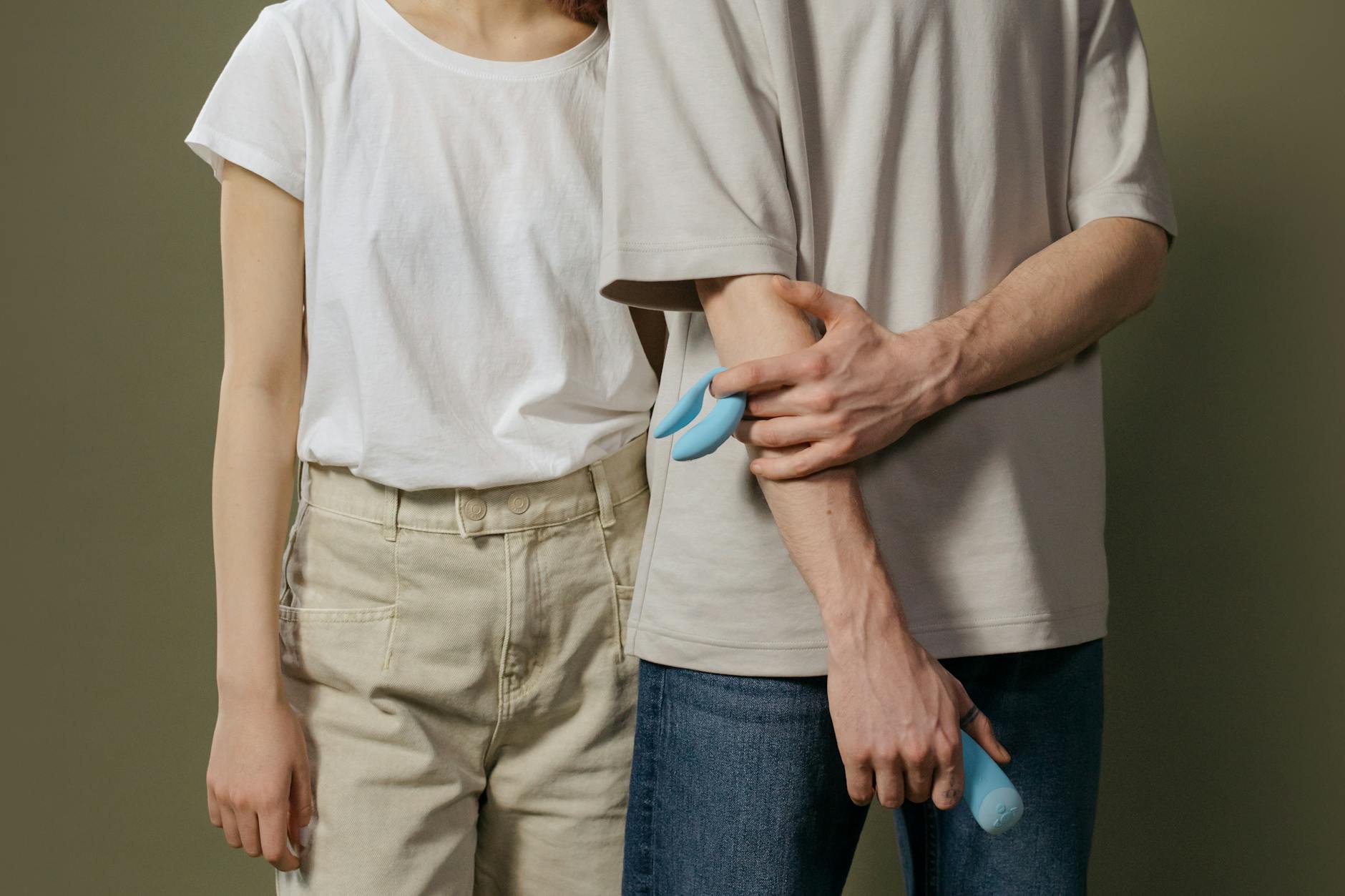
Let's be real about pleasure after 50
Your body is different than it was at 25. That's not a loss. That's information.
After 50, the way you experience pleasure shifts. Your tissues change. Hormones recalibrate. Arousal might take longer. And somewhere in all those conversations about hot flashes and sleep, nobody actually explains what happens to sex. Which is wild, because this is the chapter where you finally know what you want.
Here's what I've observed after decades of working with couples navigating midlife: the people who struggle most aren't those whose bodies changed. They're the ones who kept expecting their bodies to work like 1995.
Lemon vibrators, particularly suction-style lemon clitoral vibrators, address something crucial that traditional vibration doesn't. And if you're over 50, the difference is dramatic.
What actually changes in your tissues
Estrogen and testosterone both decline after menopause (yes, testosterone matters for everyone with a vulva—it's a major player in desire). This means:
Clitoral tissue becomes slightly less engorged during arousal. The vulva's outer lips thin. Vaginal tissue loses elasticity and thickness. Blood flow patterns shift. Your pelvic floor muscles need more intentional engagement to stay strong.
But here's the part nobody emphasizes: nerve density doesn't change. Your clitoris has roughly 8,000 nerve endings, and none of them disappeared on your 50th birthday. The way stimulation reaches those nerves just needs to shift.
That's where lemon vibrators differ from standard vibration. Instead of friction against increasingly delicate tissue, suction creates a seal and gentle pressure wave through the tissue. It's biomechanically smarter for bodies that have changed.
Why suction-style lemon vibrators outperform traditional vibration after 50
Let me break down the physics, because it matters.
A traditional vibrator moves back and forth at high speed (often 5,000+ vibrations per minute). On younger tissue with better blood flow and more natural lubrication, that works well. But after 50, repeated friction against thinner tissue can feel less pleasurable and sometimes uncomfortable, even with lube.
A lemon vibrator—the kind that uses pulsing suction technology rather than pure vibration—creates a very different sensation. It gently surrounds the clitoris and generates rhythmic pressure waves. You're not relying on tissue elasticity or speed. You're working with the neural pathways directly.
The result? Most people over 50 report:
- Faster arousal buildup (suction engages differently than vibration)
- More intense sensation without discomfort
- Easier orgasm, often more powerful
- Less friction fatigue on delicate tissue
- The ability to use it longer without numbness
This isn't theoretical. I recommend lemon clitoral vibrators to clients in my 50s, 60s, and 70s specifically because they work with how your body actually feels now, not against it.
The role of arousal time and blood flow
After 50, your body needs longer to reach full arousal. This is normal biology, not a failure.
In your 20s and 30s, arousal might peak in 5-10 minutes. After 50, budget 15-25 minutes. That's not worse. That's actually an advantage if you use it right. The extended buildup creates deeper arousal when you finally reach it.
Lemon vibrators handle this transition beautifully because the sensation is different from what your body expects from penetrative sex or traditional vibration. They engage your nervous system in a novel way, which means even if you're "not quite there yet," the suction sensation can jumpstart things that friction alone won't.
Your clitoris still has robust blood flow to the tissue. Arousal is still happening. It's just taking the scenic route.
Lubrication matters more, but it's not a problem
After menopause, your body produces less natural vaginal lubrication. This gets treated like a tragedy. It's not. It's a reason to use lube intentionally.
Here's what I tell clients: water-based lubricant is your friend. Not because you're broken. Because you deserve that layer of glide.
With lemon vibrators, you need less lube than with traditional vibration because the suction creates its own seal—you're not depending on friction or slide. A small amount of water-based lube around the opening is usually enough. Apply it fresh if sensation starts to feel sticky or dry.
Silicone-based lubes feel richer and last longer, but they can damage silicone toys. Stick with water-based if you're using a lemon clitoral vibrator. It's a small trade for a much better experience.
What shifts in pleasure (and what doesn't)
Many clients worry that pleasure itself declines after 50. It doesn't.
What changes: the pathway to get there. The type of stimulation that works best. Maybe the intensity you crave (some people want stronger sensation, others discover they prefer subtlety).
What doesn't change:
Your capacity for orgasm. Your brain's ability to feel pleasure. Your right to prioritize your own sensation. The fact that good sex is still good sex.
One of the most common surprises I hear from clients in their 50s and 60s? They have some of the most satisfying orgasms of their lives. The reasons are partly physical (you know your body better, you're less anxious, you communicate clearer). But a huge part is emotional. By 50, many people have finally shed the performance anxiety and people-pleasing that tracked them in their 20s and 30s. You're having sex for you, not for approval.
Lemon vibrators support that shift. They're not about speed or intensity for its own sake. They're about sensation, presence, and what actually feels good right now.
Building stamina and confidence with lemon vibrators
Here's something rarely discussed: using a lemon vibrator regularly actually improves your baseline sensation over time.
Consistent stimulation increases blood flow to the area. Your nervous system becomes more responsive. Sensation can sharpen. This is particularly true if you've spent years in relationships where your pleasure took a backseat. Using a lemon clitoral vibrator isn't just about the immediate experience. It's rewiring your body's capacity to feel.
I recommend starting at lower intensity (many lemon vibrators have multiple settings—begin at 1 or 2) and exploring for 10-15 minutes without pressure to orgasm. Just sensation-mapping. What feels good? Where does your attention go? Which pattern creates the most interesting chain reaction in your body?
This exploratory phase is where the real magic happens. You're learning your own body in a new way. That knowledge transfers directly into partnered sex if you have one.
The emotional shift that matters as much as the physical one
By 50, most people have experienced genuine loss. Job changes. Health challenges. Aging parents. The myth of the perfect relationship. That context changes how pleasure reads emotionally.
Pleasure after 50 often tastes different because you've learned what actually matters. Nonsense falls away. You want what's real.
A lemon vibrator supports that. It's not about fantasy or performance. It's about your body, right now, feeling good. The simplicity of that is powerful.
If you have a partner, using a lemon vibrator can also deepen connection if you approach it openly. "I want to explore this together" or "I want to show you what feels amazing right now" turns solo use into shared discovery. Many couples find that one person using a lemon vibrator during partnered sex enhances the whole experience for both people.
Addressing sensitivity and comfort
Thin tissue isn't just a biological fact after menopause. It can create real sensitivity or mild discomfort during sex or even daily life.
If that's you, a few practical strategies:
First, that water-based lube I mentioned. Non-negotiable. Apply it fresh, and don't assume less sensation means you need to push harder—often the opposite helps.
Second, start with the gentlest setting on your lemon vibrator. You can build intensity. You can't un-hurt tender tissue. Most people find that starting low and building creates better sensation anyway.
Third, if direct clitoral stimulation feels painful rather than pleasurable, try stimulating nearby tissue first. The vulva has sensation radiating outward from the clitoris. Sometimes approaching from the sides or from the mons pubis creates that same pleasure response without direct pressure.
If pain persists beyond minor adjustment, talk to a gynecologist trained in menopausal health. Topical estrogen therapy is highly effective and underused. It's worth exploring.
When to expect changes in sensation
If you start using a lemon vibrator after years of not using vibrators, or after significant hormonal shifts, your body might take a few sessions to recalibrate.
That's normal. Your nervous system is learning new input. Give it 3-5 sessions before deciding whether the sensation is "right" for you. Most people find the experience gets better and more intense as their body learns the pattern.
Also notice: time of day matters. Energy level matters. Stress matters. If you're exhausted or carrying tension, arousal will be slower regardless of what tool you're using. A warm shower, a moment to settle, maybe some breathing or music—those matter as much as the lemon vibrator itself.
Pleasure is a practice, not a performance
After 50, you have permission to approach pleasure as exploration rather than achievement. You know your body. You've earned the right to be picky about what feels good.
Lemon vibrators work beautifully for this because they meet your body where it actually is—not where it was, not where you wish it were.
If you're partnered, this is also the moment to have real conversations about what's shifted for both of you. "My body needs more time now" isn't a problem to solve. It's information that can actually deepen intimacy if you let it.
Your best sexual years might actually be ahead. Not because you're getting younger, but because you're finally giving yourself permission to actually want what you want.
People Also Ask
Are lemon vibrators safe to use after menopause?
Completely. Lemon vibrators are designed to work with your body's actual physiology. Use water-based lube, start at a lower intensity setting, and listen to what feels good. If you have vulvovaginal health concerns (like pain during sex), check with a gynecologist first, but a lemon vibrator isn't contraindicated. In fact, many people find it helps rewaken sensation.
How often can you safely use a lemon vibrator at 50 and beyond?
As often as you want. There's no limit. Some people use them daily, others a few times a week. Your body will tell you what feels sustainable. If you notice soreness or numbness, take a day or two off—that's your nervous system saying it needs a reset. But generally, consistent use actually improves sensation over time.
Do lemon vibrators feel different than regular vibrators for mature bodies?
Yes, significantly. Lemon vibrators use suction and pulsing rather than rapid vibration. This creates a different pressure wave through the tissue, which many people over 50 find more pleasurable and less likely to cause discomfort on thinner tissue. The sensation is often described as more intense even at lower settings.
Can you use a lemon vibrator if you're on hormone replacement therapy?
Absolutely. HRT doesn't change how lemon vibrators work. If anything, restoring some estrogen can improve tissue health and sensation, which works beautifully alongside using a vibrator. The combination often creates the most responsive experience.
What's the best lemon vibrator to start with after 50?
Look for a lemon clitoral vibrator with multiple intensity settings so you can start low. Water-resistant is helpful for easy cleanup. Quiet operation matters if you want privacy or share your space. Start with the gentlest setting and explore for 10-15 minutes without pressure to orgasm—you're learning your body, not racing to a finish line.
Does using a lemon vibrator affect partnered sex?
Often it improves it. Using a vibrator solo teaches you what you actually love, which you can then communicate to a partner. During partnered sex, some people incorporate a lemon vibrator for additional stimulation. Many couples find this deepens connection because it shifts the focus from performance to sensation and presence. Open conversation matters most.
The bottom line
Your body at 50+ is not a downgrade. It's a different operating system. Lemon vibrators respect that shift instead of fighting it.
Your pleasure matters. Your experience matters. And the best time to explore what actually feels good—free from performance pressure and full of hard-won self-knowledge—might actually be right now.
If you want to explore further or have questions about what works for your specific situation, reach out. That's what I'm here for.