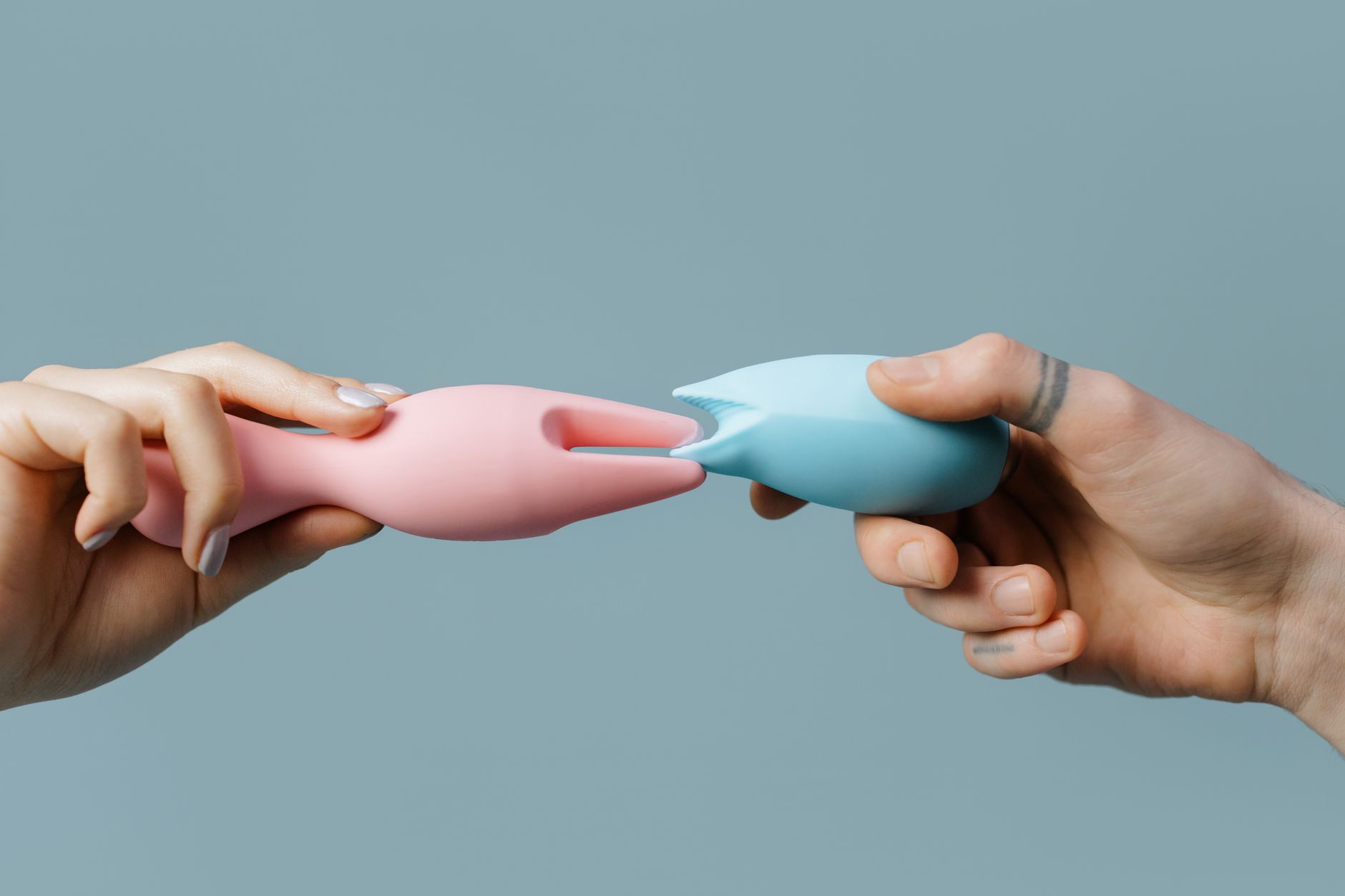
Let's talk about the arousal slowdown nobody warns you about
After 40, it takes longer to get turned on. Not a little longer. Sometimes noticeably longer. And for a lot of people, that shift shows up like a personal failure instead of what it actually is: a well-documented neurological and hormonal change that affects blood flow, nerve sensitivity, and how quickly your brain signals your body to respond.
Here's the thing nobody says clearly: this is not a character flaw. Your desire hasn't vanished. Your capacity for pleasure hasn't shrunk. What's changed is the lag time between stimulus and response. And that lag is fixable.
What actually changes in your nervous system after 40
By your 40s, your body has been through decades of hormonal fluctuation, stress cycles, and aging. At a neurological level, three specific things happen:
Blood flow to the genitals takes longer to ramp up. Arousal depends on vasocongestion, the pooling of blood in the clitoral and vulvular tissues. This process is slower after 40 because blood vessel elasticity changes slightly with age, and systemic blood pressure regulation shifts. The neural signal still fires. The response just takes 10 to 20 minutes instead of 3 to 5.
Nerve sensitivity becomes more concentrated. The clitoris has around 8,000 nerve endings, but after 40, the distribution of sensitivity can shift. Some areas become less responsive to light touch while others become hypersensitive to direct stimulation. This is why what worked at 35 might feel off at 45.
Cortisol and baseline stress raise your arousal threshold. If you've spent two decades managing work, relationships, and life logistics, your nervous system has adapted to operate at higher baseline stress. That means it takes more stimulus to cross the threshold from "managing" into "turned on."
None of this is permanent. All of it responds to the right input.
Why lemon vibrators work better for slower arousal
Clitoral vibrators, especially suction-based ones like lemon vibrators, bypass the lag by directly stimulating the nerves instead of waiting for natural bloodflow to do the work. Here's the mechanics:
The Lem Vibrator uses air-suction technology, which creates rhythmic pressure pulses around the clitoris. This stimulates the network of nerve endings far more efficiently than manual stimulation or friction alone. Research on vibrator efficacy shows that people over 40 who use clitoral vibrators experience measurable orgasms in 4 to 8 minutes, compared to 15 to 25 minutes with manual stimulation.
Why? Because suction doesn't require the same level of baseline arousal to trigger response. You don't have to wait for natural lubrication to build and blood vessels to dilate. The vibration does the work for you.
The specific protocol that actually works
If arousal is slow for you after 40, here's the exact approach that gets results.
Start before you think you're ready. Don't wait until you're "in the mood." Start lemon vibrator stimulation when you're neutral or mildly interested. Your body will catch up. This flips the script from waiting for arousal to happen to building it.
Use pattern 1 or 2 for the first two minutes. The Lem's lower intensity levels warm up your nervous system without overwhelming it. Lower intensity actually works better for slower arousal because it allows gradual nerve activation instead of shocking the system.
Move to patterns 3 to 5 once you feel response. You'll notice when arousal is building. It's a subtle warming, a sense of increased sensitivity. That's when you can move to higher intensity. Don't rush it.
Stay in one spot for 20 to 30 seconds per pattern. The clitoris has distinct zones of sensitivity. The glans (the head) is most sensitive, but the body and hood also respond well. Staying in one area long enough lets nerve endings fully activate before moving on.
Build to your finish over 4 to 7 minutes. Once you're at pattern 5 or 6, you're working in high-arousal territory. From here, orgasm typically arrives in 3 to 5 minutes. The total time from start to finish is often 7 to 12 minutes, versus 20 to 40 minutes without a vibrator.
The key difference: you're not waiting for your body. Your body is catching up to what the vibrator is already doing.
The role of context and relaxation
Technique matters. Context matters more.
After 40, mental state has a bigger influence on arousal than it did at 25. If you're thinking about the work email that's still unanswered, your nervous system is in a mild stress response. That state doesn't disappear just because you're trying to get turned on. It just means your arousal threshold is higher.
This is why slowing down beforehand helps so much. Five minutes of genuinely relaxing before you start, not five minutes of "trying to relax," makes a measurable difference. Some people find dimming the lights, adjusting the temperature, or putting the phone in another room does it. Others need music or to be alone with a partner who understands they're building arousal, not already there.
Once you start using the Lem, your job is to get out of your own way. The vibrator is doing the work. Your job is to notice sensation, not perform arousal or chase a specific outcome.
How to use lemon vibrators if you're with a partner
Slower arousal after 40 doesn't just affect solo sessions. It changes partnered sex too, and that's worth addressing directly.
Many couples in their 40s slip into the pattern where the partner with slower arousal feels rushed or inadequate, and the other partner feels rejected or bored during warm-up. A lemon clitoral vibrator can reframe that entire dynamic.
One option: use the vibrator together during foreplay. Your partner can be involved, present, and actually aroused while you're using the lemon vibrator to build your response. This removes the pressure from your partner to "do enough" and removes the shame from you about "taking too long." You're both in it.
Another angle: use it solo first to understand your own arousal map, then show your partner what you've learned. "This is what turns me on now" is wildly different from "I don't respond like I used to."
When slower arousal might signal something else
Slower arousal after 40 is normal and fixable. But if arousal has almost completely disappeared, or if it suddenly shifted within a short window, that's worth mentioning to a doctor.
Antidepressants, blood pressure medication, thyroid changes, and hormonal shifts can all affect arousal speed and intensity. So can unaddressed relationship tension, recent grief, or depression. A vibrator is a tool, not a diagnosis. If something feels medically off, get it checked.
For the vast majority of people, though, slower arousal after 40 is just your nervous system adjusting. And it responds beautifully to the right stimulus.
Frequently asked questions
How much slower does arousal get after 40, on average?
Studies show arousal time increases by about 2 to 4 minutes on average in your 40s, and another 2 to 3 minutes in your 50s. That's a 50 percent increase compared to your 20s. But the range is huge. Some people notice almost no shift, while others experience a doubling of arousal time. Where you fall depends on stress levels, hormonal changes, cardiovascular health, and relationship dynamics.
Will using a vibrator make my slower arousal worse over time?
No. This is one of the most persistent myths. Your body doesn't become "dependent" on vibrators the way it might adapt to other repeated stimuli. If anything, using a vibrator teaches your nervous system to respond more efficiently. Many people find that after a few weeks of regular use, arousal speeds up even during manual stimulation.
Is slower arousal the same thing as lower libido?
Not always. Libido is desire or the urge to have sex. Arousal is your body's physical response once you're engaged. You can have strong libido but slow arousal, or decent libido but feel disconnected during sex. Slower arousal is mechanical and fixable. Lower libido often points to stress, relationship issues, or hormonal changes, and it's a different problem with different solutions.
Can medication be causing my slower arousal?
Yes. SSRIs, blood pressure meds, and certain antihistamines can all slow arousal. If you started a medication around the same time arousal shifted, it's worth discussing with your prescriber. Dosage changes or switching to a different medication in the same class often helps.
Should I be using a lemon vibrator solo or with a partner if arousal is slow?
Start solo. You'll learn your body faster and without the pressure of performance. Once you understand what turns you on and how long it takes, you can bring that knowledge into partnered sex if you want to. Some people prefer vibrators solo and manual stimulation with partners. Others love using them together. There's no right answer.
How long should I use a lemon vibrator during each session before I'd expect results?
Most people notice a shift within the first week of regular use. Not necessarily "cured," but noticeably faster arousal and stronger response. Consistent use over two to four weeks is when the changes really consolidate. Your nervous system learns, adapts, and gets more responsive with repetition.
You're not slow. Your body is just working differently now.
Slower arousal after 40 is not a failure. It's not a sign that your best years are behind you. It's a measurable, predictable change in how your nervous system processes stimulation. And it responds to the right tools.
Lemon vibrators and other clitoral stimulators cut through the lag by working directly with your nerve endings instead of waiting for the slow cascade of natural arousal. You get faster response, stronger sensation, and the pleasure you deserve. The time you get back is real, and it matters.
If this resonates with where you are, start experimenting. Your body knows how to feel good. It's just asking for a little more direct support. Contact Lem Vibrator if you have questions about which tool might work best for your body.