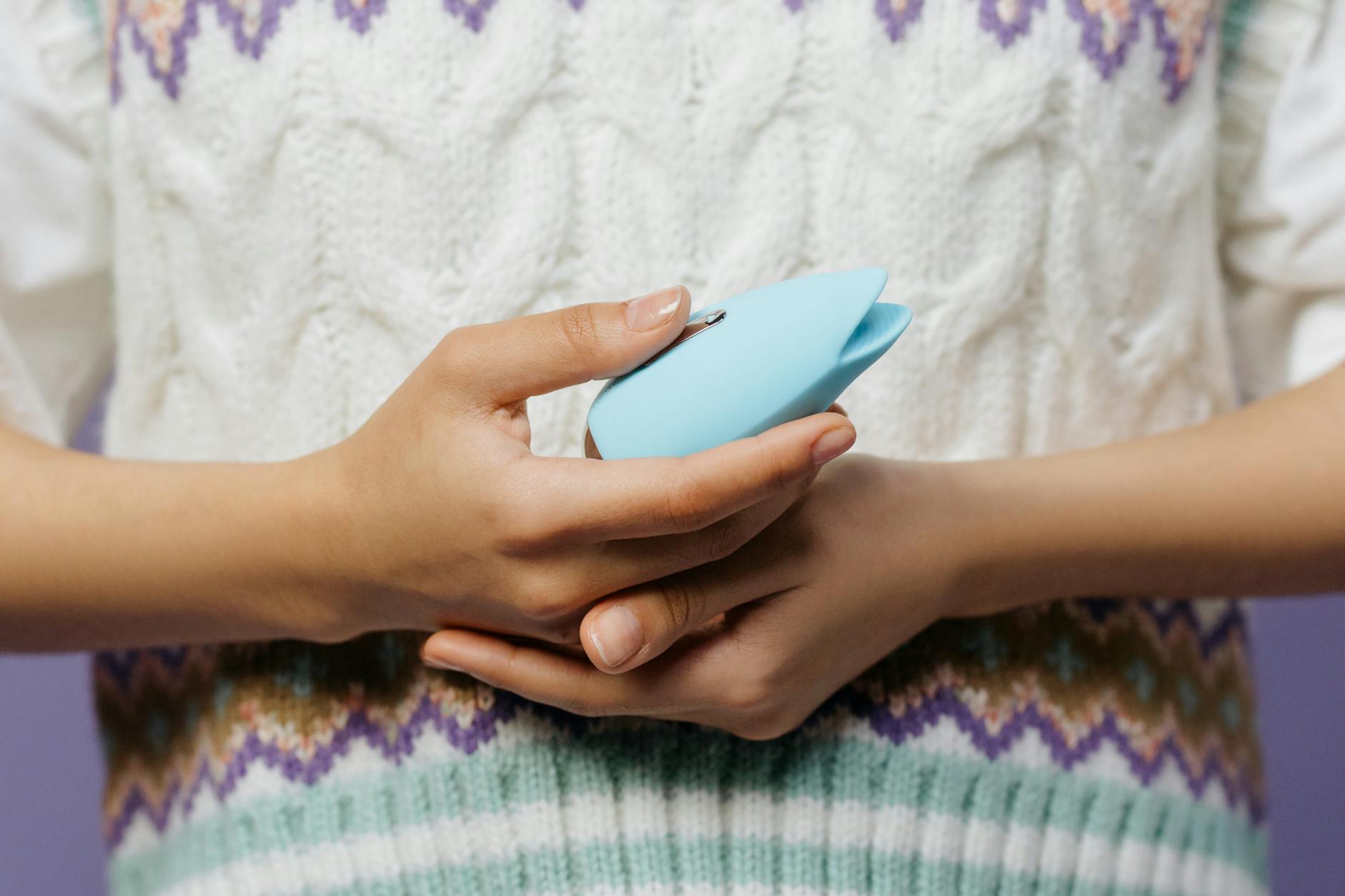
Let's start here: pleasure after trauma is not something you owe anyone
Not your partner. Not yourself. Not the narrative that says healing means getting back to normal. If you're reading this, you're probably somewhere in recovery from sexual trauma. Maybe you're years into it. Maybe it's fresh. And maybe someone (or your own brain) has whispered that if you could just use the right tool, have the right experience, get stimulated the right way, you'd suddenly feel okay again. That's not how this works. But that doesn't mean lemon vibrators have no place in your healing. They might. The trick is understanding what role they can actually play.
The neurobiology of trauma and why pleasure feels unsafe
Here's what happens in the nervous system after sexual trauma: your brain learns that sexual touch equals danger. That's not a character flaw. That's your nervous system doing exactly what it's supposed to do. The vagus nerve, which governs the parasympathetic response (your rest-and-digest state), gets dysregulated. Your body stays in a low-level state of fight, flight, or freeze even when you're safe. Pleasure requires a regulated nervous system. When your nervous system is stuck in protection mode, pleasure signals get read as threats.
This is why forcing yourself to feel pleasure often makes things worse. It's not stubbornness. It's biology.
What changes when you work on nervous system regulation first
Before you even think about a lemon vibrator or any clitoral toy, the real work is stabilizing your nervous system. This looks like:
Somatic awareness. Spending time noticing physical sensations without trying to change them. Where do you feel tension in your body? Can you locate a place that feels neutral or safe? Start there.
Grounding techniques. The 5-4-3-2-1 method (five things you see, four you can touch, three you hear, two you smell, one you taste) brings your brain out of trauma memory and into the present moment. Do this before any sexual exploration.
Breath work. Slow exhales activate the vagus nerve and signal safety to your nervous system. A longer exhale than inhale (like breathing in for four counts, out for six) is calming. Practice this separately from sexual touch for at least a month.
Professional support. EMDR, trauma-focused CBT, and somatic experiencing therapy have actual evidence behind them. A toy cannot replace this work.
When a lemon vibrator becomes a healing tool (not a shortcut)
If you've been working on nervous system regulation and your therapist or partner agrees, a clitoral vibrator can serve a specific purpose: it gives you control over intensity and pace in a way that helps you rebuild trust in your own body.
Here's the distinction: a lemon vibrator becomes healing when it's used to practice autonomy, not to prove you're "fixed."
Start with the Lem on its lowest setting, in a totally private space where you know you won't be interrupted. The goal is not orgasm. The goal is to spend five minutes noticing what sensations feel tolerable, what feels good, what makes your nervous system tighten. That information is the entire point.
Many trauma survivors find that the suction technology in air-pulse vibrators feels gentler and more diffuse than traditional vibration. It doesn't concentrate pressure in one spot. That gentleness can feel safer to your nervous system than intense direct stimulation.
Building a window of tolerance with your body
Trauma shrinks your nervous system's window of tolerance. Small stressors feel huge. Big ones feel catastrophic. Pleasure gets read as a stressor. The job is to gradually widen that window.
When you use a lemon vibrator as part of this work, you're practicing staying present in a sensation that's close to pleasure without it triggering panic. You're teaching your nervous system: this touch is safe. I am in control. I can stop anytime.
Start with one minute. Not five. One. Breathe normally. Notice what you notice. Then stop. The stopping is as important as the sensation. You're proving to your nervous system that you have agency.
Over weeks or months, as your window widens, you might extend to two minutes, three, five. You're not chasing an orgasm. You're building a felt sense of safety in your own body.
The role of your partner (if you have one)
Partners of trauma survivors often feel helpless. They want to fix it. They want to help you feel good. This usually backfires because it centers their desire to help over your need for control.
If you're in a relationship, the conversation needs to be clear: "I'm using this tool to rebuild trust in my own body. I need you to not be involved in that process right now. I'll let you know when and if I want that to change." This protects both of you. Your partner isn't waiting for you to perform recovery. You're not pressured to progress faster than your nervous system can handle.
When to pause and when to keep going
Honestly though, knowing when to stop is harder than knowing when to start. If you notice yourself using a vibrator to dissociate, to numb out, to achieve something for someone else's benefit, pause. That's not healing. That's re-traumatization wearing a different mask.
Good signs you're on track: curiosity without pressure. Noticing physical sensations. Stopping when you want to, not when you have to. Feeling more embodied afterward, not more numb.
Red flags: racing thoughts. Panic rising. Your body feeling like it's not yours. Shame. Obligation. If those show up, close the door, put the toy away, and come back to grounding work.
The permission piece (which is the hardest part)
Most trauma survivors have internalized a message that their pleasure is dangerous, selfish, or not theirs to claim. Using a clitoral vibrator can trigger that directly. Your brain might say: "This is what hurt me before. This means something is wrong with me. I should want this more. I should feel more." None of that is true.
Your pleasure is not dangerous. Your body is not broken. A lemon vibrator is a tool. It has no power beyond what your nervous system decides to give it.
Here's what I tell clients: pleasure is not a destination you have to reach to prove you're healed. It's a capacity that comes back naturally when your nervous system feels safe enough. Sometimes that takes months. Sometimes years. Sometimes vibrators help. Sometimes they don't. All of that is completely fine.
FAQ: Healing, pleasure, and clitoral vibrators
Can I use a vibrator if I'm still having intrusive memories during sex?
Yes, but with intention. Some survivors find that total control over a device (you alone, no partner, no pressure) actually interrupts the intrusive memory loop. Others find it triggers more. The only way to know is to try in a really safe environment, and have a clear stopping point. If memories get stronger, that's important information, not failure.
Is it normal to feel nothing when I use a clitoral vibrator after trauma?
Completely normal. Dissociation and numbness are trauma responses. Your nervous system is protecting you. Using a vibrator won't fix this alone. But practicing noticing subtle sensations (warmth, texture, gentle pressure) without pushing for pleasure can eventually wake that capacity back up. Think of it like physical therapy for your nervous system.
What if I feel guilty using a vibrator because of my faith or upbringing?
That guilt is real and valid, and it's separate from the vibrator. You're likely carrying shame messages about your body and pleasure that predate the trauma. A trauma-informed therapist or counselor (possibly one who specializes in sex-positive spirituality) can help you untangle those. A vibrator is a tool. The messages you carry about whether you're allowed to use it deserve their own work.
Should I tell my partner I'm using a vibrator for trauma recovery?
That depends on your relationship and what feels safe. Some partners are genuinely supportive and can hold space for your healing without needing to be involved. Others feel excluded or hurt. The conversation might be: "I'm doing some nervous system work with solo pleasure. It's not about you. I'll tell you if things change." Honesty without oversharing often works. Trust your instincts.
Can vibrators help me with PTSD flashbacks during sex?
Not directly. But if you practice using a vibrator alone in a safe, controlled way, you can build evidence that pleasure can happen without danger. That evidence changes your nervous system's threat assessment over time. During partnered sex, if flashbacks come up, that's a moment to pause, ground, and possibly talk to your partner. The vibrator work is preventive, not curative.
How long until using a vibrator stops triggering shame or fear?
There's no timeline. For some people, weeks. For others, months or years. Progress is usually not linear. You might feel totally fine for three weeks, then suddenly triggered again. That's normal. What matters is whether you keep coming back with curiosity instead of judgment.
The slow road is the only road that actually works
There's no fast-track to pleasure after trauma. There's no magic vibrator setting that rewires your nervous system. What there is: patience, professional support, a tool like a lemon vibrator that you control completely, and time.
Your healing doesn't have an audience. It doesn't have a deadline. You don't owe anyone a return to "normal" sexuality. What you owe yourself is gentleness, safety, and the space to find out what pleasure means to you now, on your own terms.
If you're working with a therapist or counselor on trauma recovery and want to explore how clitoral vibrators fit into that work, that conversation is worth having. They can help you determine whether this tool serves your specific healing or whether other approaches might be more helpful right now. Your pleasure is worth that kind of thoughtful, individualized care.