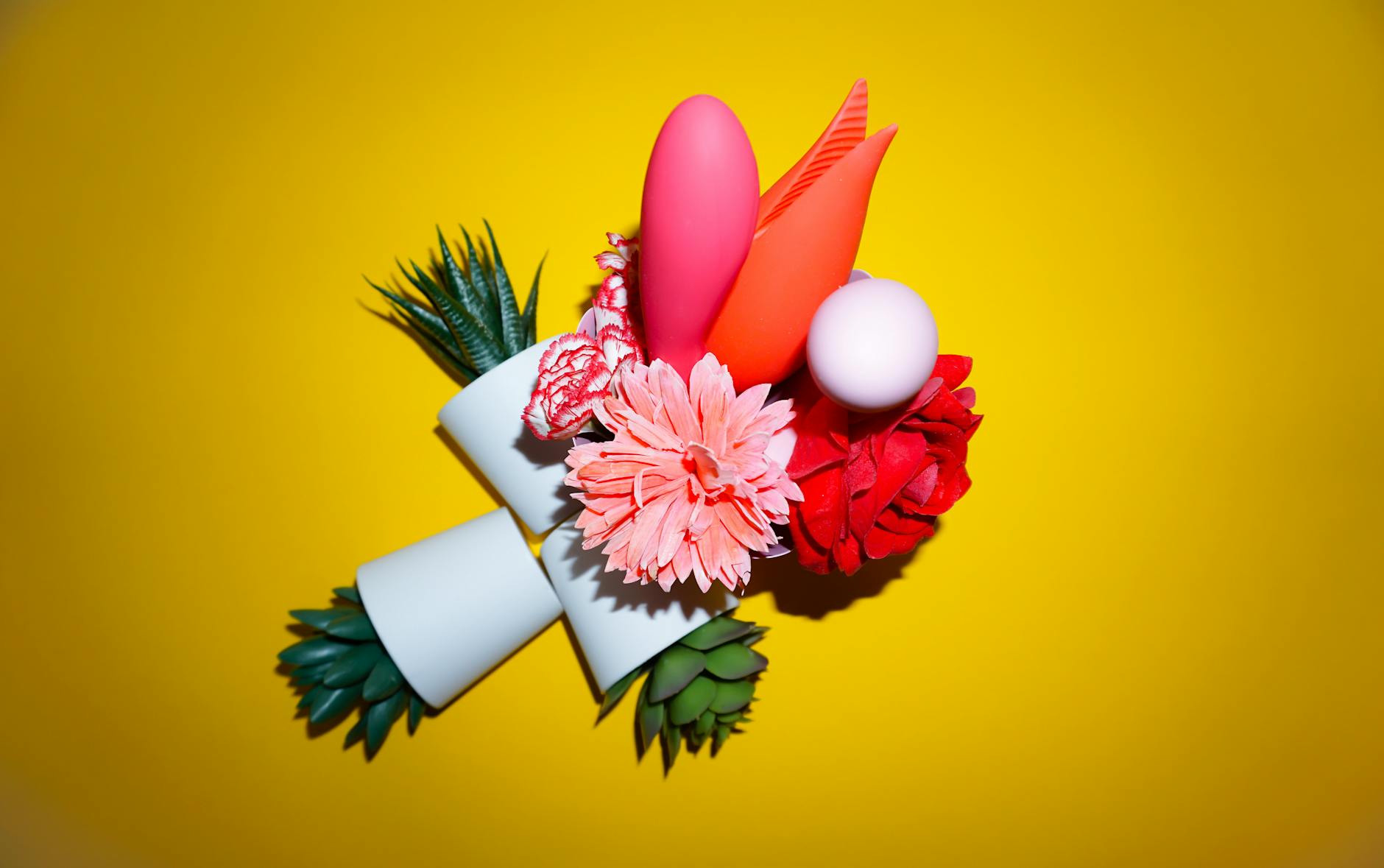
Let's talk about the opposite problem
Most conversations about sexual pleasure focus on not feeling enough. Not enough sensation, not enough arousal, not enough intensity to reach orgasm. But here's what nobody tells you: sometimes your body swings the other direction. Clitoral sensitivity can spike so high that even the gentlest touch feels like too much. It's not a dysfunction. It's a signal your nervous system is sending, and once you understand what it's saying, you can work with it instead of against it.
Heightened clitoral sensitivity is surprisingly common. It shows up after hormonal shifts, during certain phases of your cycle, as a side effect of some medications, or sometimes just because your body decides to recalibrate. The instinct is usually to avoid stimulation altogether. That's understandable. But it often means losing access to pleasure you actually want, because you're applying a blanket "don't touch" rule to a situation that needs finesse instead.
Why sensation can feel overwhelming
Your clitoris has roughly 8,000 nerve endings packed into an area smaller than a pea. That's about four times the nerve density of a penis, which explains why stimulation can feel disproportionately intense. When those nerves are activated by hormones, inflammation, medication, or just plain hypersensitivity, they fire harder and faster than usual.
There's also a feedback loop happening in your brain. If you anticipate that touch will hurt or feel overwhelming, your nervous system tenses up preemptively. That tension amplifies sensation. So the problem compounds: you're not just dealing with heightened sensitivity, you're dealing with the anxiety-driven anticipation of that sensitivity, which makes it worse.
The good news is that both of these factors are workable.
Start by identifying the actual source
Overwhelming sensation isn't always just "I'm sensitive right now." It matters whether you're dealing with:
Hormonal heightening. If sensation spikes around ovulation or a few days before your period, you're looking at estrogen and testosterone fluctuations. This is temporary and cyclical.
Inflammation or irritation. If the area feels raw or inflamed separately from stimulation, this is different. Tight clothing, shaving rash, or early signs of infection will make everything feel too much. Address the underlying issue first.
Medication side effects. Some antidepressants, blood pressure meds, and hormonal contraceptives increase sensitivity as a known side effect. If this is new and correlates with a prescription change, talk to your doctor. There may be alternatives.
Anxiety or tension. If the sensitivity feels worse when you're stressed or tired, you're likely dealing with nervous system dysregulation rather than true hyperreactivity. Sleep, movement, and breathing work often help more than avoiding stimulation.
How lemon vibrators actually help (not just make it worse)
You might assume that introducing a vibrator would intensify an already overwhelming situation. In practice, air-suction devices like Lem vibrators often do the opposite. Here's why.
Traditional vibrators rely on direct mechanical friction against tissue. When sensitivity is already high, that friction can feel abrasive or jarring. Air-suction toys work differently. The Lem creates a gentle pulling sensation rather than buzzing or rubbing. For many people with heightened sensitivity, suction feels more diffuse and controllable than direct stimulation. You're not adding more intensity to an already raw nerve. You're distributing sensation across a broader area.
There's also a distance factor. Because suction works from slightly above the surface, you have more control over how directly stimulated the most sensitive spots feel. With your hands or a vibrator that requires contact, you're applying force directly to tissue. The Lem gives you a buffer zone.
The technique that actually works
If you're going to use a lemon vibrator when sensation feels heightened, forget everything you think you know about building intensity.
Start with the lightest setting. The Lem has multiple intensity levels. Begin at pattern one, the absolute lowest. You're not ramping up from there. You might stay there for your entire session, and that's completely fine.
Use the broad base, not the tip. Position the wider part of the suction opening against your vulva rather than centering it directly over the clitoris. This distributes suction across a larger area and prevents the sensation from concentrating on the most sensitive spot.
Add distance. Don't press hard. Let the toy hover and make light contact. Heavy pressure amplifies suction intensity. Feather-light contact gives you the sensation without the overwhelm.
Breathe through the intensity. This isn't mystical. When your nervous system anticipates discomfort, you tense and hold your breath. That tension makes sensation feel sharper. Slow breathing activates your parasympathetic nervous system (the "rest and digest" branch). It literally downregulates pain perception. Breathe in for four counts, out for six. Do this the whole time.
Take breaks. Unlike traditional vibrators that you keep running continuously, you can pulse with a lemon vibrator. Three seconds on, five seconds off. This prevents your nervous system from getting overloaded by continuous input.
When to use lubricant
Countintuitively, this is where many people get it wrong. The instinct when sensation is overwhelming is to avoid anything that might amplify it. But the right lubricant actually reduces discomfort.
Water-based lube reduces friction, which can make the experience feel less sharp or raw. Silicone-based lubes (incompatible with silicone toys, fine with Lem's material) feel smoother and less grabby. The slickness means less tugging sensation and more glide. For heightened sensitivity specifically, good lubrication often makes the experience feel better, not worse.
Use it generously. There's no such thing as too much when sensitivity is high.
The mindset shift that changes everything
Most of us are taught that "overwhelming" sensations mean "stop." Your body is trying to tell you something, so you listen by withdrawing. But heightened sensitivity doesn't automatically mean harm. It means you're noticing more.
There's a difference between "this is painful" and "this is very intense." Pain is a hard stop. Intensity is information. When you work with intensity gradually, your nervous system learns that you're safe. The anticipatory anxiety drops. Sensation becomes more manageable because your body isn't bracing against it.
This is where starting with more control over your own pleasure becomes foundational. Solo exploration teaches your nervous system what you actually enjoy versus what you're afraid of. You're running your own pace, setting your own intensity, with no pressure to perform or reach a goal. That sense of agency is often what transforms overwhelming sensation into something you can actually work with.
Checking in with your body
After a few sessions with the Lem at the lightest intensity, you'll develop a clearer sense of what's actually too much versus what just feels intense. Some people find that they can gradually increase to medium settings. Others discover they prefer staying low. Both are completely valid.
Pay attention to what happens in the hours after. Does sensation feel calmer? More manageable the next time? Or does it escalate? Your body's response tells you whether you're gently expanding your sensitivity window or pushing too hard.
If heightened sensitivity persists for more than a cycle or two, if it's accompanied by pain, or if it's genuinely preventing you from pleasure you want, talk to a gynecologist. Sensory changes can sometimes signal something worth checking out. But in most cases, heightened sensitivity is temporary and highly workable once you adjust your approach.
FAQ
Can heightened sensitivity ever become permanent?
It can, but it's rare without an underlying cause. Most cycling sensitivity resolves within one to three months. If it persists, the issue is usually medical (hormonal imbalance, inflammation, nerve irritation) or psychological (anxiety creating a feedback loop). Both are treatable. See a gynecologist to rule out the medical side, then explore whether stress or anticipatory anxiety is amplifying things.
Does using a lemon vibrator make heightened sensitivity worse over time?
No. In fact, gentle repeated exposure to sensation often desensitizes your nervous system over time. You're basically teaching your body "this stimulus is safe." Avoidance does the opposite. It reinforces the idea that the sensation is threatening, which makes anticipatory anxiety worse. Starting low and building gradually is key.
What if I can only tolerate stimulation if I'm extremely relaxed?
Then relaxation is your entry point, not a limitation. The goal is pleasure, not proving you can handle intensity. If you need a full body massage, a bath, meditation, or an hour of foreplay before you're ready for clitoral stimulation, that's your protocol. There's nothing wrong with that. Build in whatever you need. Some people use mindfulness apps designed for sexual anxiety, some use partnered touch first, some need total silence and darkness. Whatever gets your nervous system to a genuinely relaxed state is the right approach.
Is heightened sensitivity related to desensitization from past vibrator use?
Possibly, but usually not in the way people fear. Desensitization from overuse typically makes you feel less, not more. If you're suddenly feeling too much after previously feeling less, something else has shifted. Hormones, stress, medication, inflammation, or even a change in how you're using the toy. The good news is that once you identify the cause, it's usually reversible.
Can my partner help when sensation feels overwhelming?
Absolutely, but the dynamic has to change. Rebuilding intimacy when sensation is complicated means your partner is following your lead, not setting the pace. They might hold the Lem, but you're directing intensity. You might use it together but solo, so you're each maintaining control over your own experience. The key is removing performance pressure and any sense that your partner needs you to enjoy something that actually doesn't feel good.
Is there a difference between heightened sensitivity and pain during sex?
Yes, and it matters clinically. Pain is a sharp, pinching, burning, or aching sensation that feels wrong. Heightened sensitivity is intense but not necessarily painful. It's just a lot. If what you're experiencing is genuinely painful (not just intense), that's genitourinary syndrome of menopause, vaginismus, vulvodynia, or another condition that needs specific treatment. See a gynecologist who specializes in sexual health. Don't assume intensity and pain are the same thing.
You're not broken. You're just tuning in.
Heightened clitoral sensitivity is your nervous system's way of asking you to slow down and pay attention. It's not a sentence to a pleasure-free life. It's an invitation to explore what works for your body right now, at this moment, with this particular setup. The Lem is a tool that works particularly well for this because it gives you control, distributes sensation, and lets you adjust on the fly. Start low. Breathe. Be patient with yourself. Your capacity for pleasure isn't gone. It's just asking for a different approach.
When you're ready to explore further, we're here to help.