
Let's talk about what's actually happening
Here's the thing: most people with vulvas cannot orgasm from penetration alone. Studies consistently put that number between 65 and 80 percent. That means if you're in a partnered relationship and you need clitoral stimulation to come, you're not broken. You're in the majority.
The problem isn't your body. It's that for decades, partnered sex has been framed as penetration plus whatever else might happen. Clitoral stimulation gets positioned as optional foreplay instead of what it actually is: the primary pathway to orgasm for most people.
Lemon vibrators change the math because they let you and your partner access what your body actually needs without stopping, switching positions, or one of you having to do all the work.
Why penetration alone doesn't usually work
The clitoris has 8,000 nerve endings. The vaginal canal has far fewer, and most of those are concentrated near the entrance. During penetration, the angle of stimulation doesn't typically align with where the clitoral glans is located. You might feel good things, but orgasm requires consistent, targeted pressure that penetration alone rarely delivers.
There's also the mental load. If you're focused on whether your partner is getting close, whether you're taking too long, or whether this is the position where it finally works, your brain isn't in the state that lets orgasm happen. Distraction is one of the biggest orgasm killers, and performance anxiety is basically distraction with a spotlight on it.
A lemon clitoral vibrator cuts through both barriers at once. It provides the targeted stimulation your clitoris needs, and it removes the pressure from your partner to be the sole source of sensation.
The conversation that needs to happen first
If you're partnered, talking about this before the moment matters. Not a formal sit-down (though that works if you both want it), but something honest: "I want to try using a vibrator during sex because I come faster with clitoral stimulation, and I'd love for us to figure that out together."
That reframe is important. It's not "you're not enough." It's "here's how we both get what we want." Partners who feel resentful about vibrators often feel that way because they absorbed the myth that their penis or fingers should be enough. Conversations that lead with anatomy instead of ego tend to land better.
If your partner is resistant, sometimes it helps to say: "Using a vibrator isn't instead of us. It's alongside us." Vibrators enhance partnered sex for most couples who use them. They don't replace it.
Where to position the lemon vibrator during sex
The easiest setups are positions where your clitoris isn't buried against your partner's body. Angles matter.
Woman on top or facing partner: You have full control of positioning and pressure. Hold the lemon vibrator against your clitoris while you move. Your partner can be still or move at their own pace. You set the rhythm that works for both stimulation types.
Spooning position: This is underrated. Your partner enters from behind, and you can hold the vibrator to your clitoris without interference. It's intimate, you're close, and the mechanics work.
Sitting facing each other: Either in bed or on the edge. You can direct the vibrator exactly where it needs to be, and eye contact stays open. Your partner can penetrate or stay still while you control the sensation.
Your partner holds it: If you're in a position where your hands are otherwise occupied, some partners enjoy holding a vibrator against you during sex. It shifts the dynamic from "you're adding something" to "we're doing this together." Talk through the pressure level and position you want beforehand.
Starting with lemon vibrators if this is new
If you've never used a vibrator during partnered sex, here's how to ease in without it feeling like a production.
Start during foreplay rather than mid-penetration. Get aroused together, and introduce the vibrator before penetration happens. This removes the pressure of timing it perfectly while you're already in motion. Your partner can use it on you, or you can use it on yourself while they touch you elsewhere.
Lemon vibrators work well here because they're intuitive. No learning curve. Start at a lower pattern, which most lemon vibrators have available, and let your arousal build. Many people find they relax faster when the vibrator is already doing its job before penetration begins.
Once you're ready, your partner can enter while you keep the vibrator in place. The sensation of vibration plus penetration is different from either alone, and it usually pushes toward orgasm much faster than penetration could alone.
That first time might feel awkward. That's normal. By the third or fourth time, it usually feels natural.
How to handle the rhythm question
One thing that trips couples up: if you're using a vibrator, does your partner need to stay still, or can they move at their own pace?
The answer depends on what feels good to you. Some people want their partner moving while they hold the vibrator steady. Others want both. The best approach is to try it and check in.
If you're the one holding the vibrator, you might ask: "Do you want me to keep this still while you move, or should we move together?" That conversation doesn't have to be formal. It can happen during, between movements, or before you start.
A lot of people assume vibrators mean their partner should stop moving or that one person has to sacrifice their pleasure for the other to come. That's not how it works. Most vibrators can be integrated into whatever rhythm already feels good. The vibrator adds targeted clitoral stimulation to whatever else is happening.
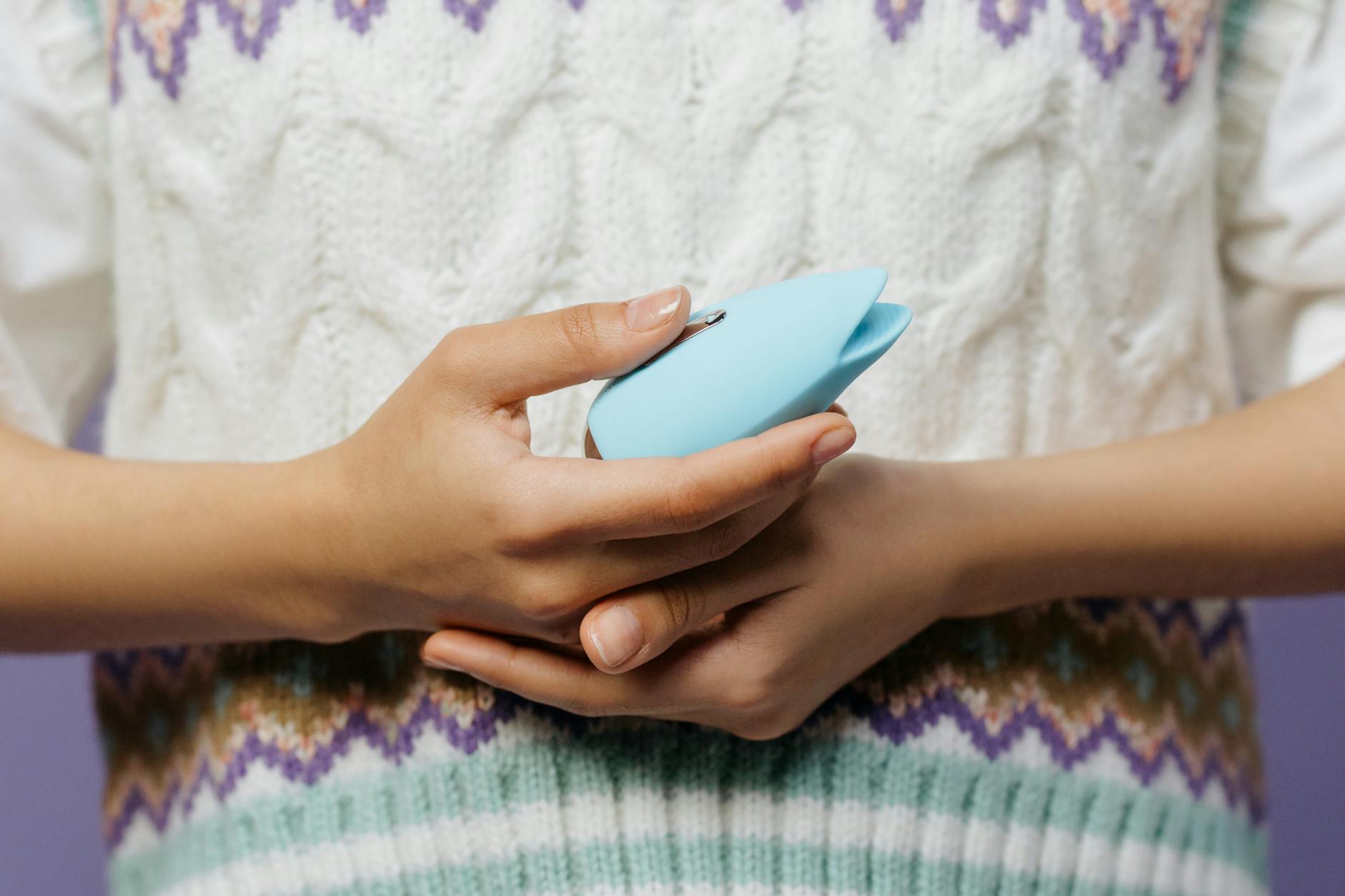
Photo by cottonbro studio on Pexels
Why lemon vibrators are particularly good for this
Lemon vibrators are designed for clitoral stimulation, which means the shape and intensity patterns are built for what you actually need. They're not trying to be everything. They're excellent at one thing: delivering targeted sensation to the clitoris.
Unlike wand vibrators, which can sometimes feel too intense or hard to position during sex, lemon vibrators are compact and designed for precise placement. The suction-based sensation also feels different from a traditional vibrator, and many people find it more effective for reaching orgasm quickly.
If you're using a lemon clitoral vibrator during partnered sex for the first time, the patterns usually range from steady vibration to pulses. Most people start with a slower pattern and increase if needed. You don't need intensity to work. You need consistency and the right location.
What to do if it takes a while
Sometimes orgasm still doesn't happen, even with targeted clitoral stimulation. That can happen for a few reasons: you're still in your head about it, the angle isn't quite right, or you need more time than the partnered session allows.
If orgasm isn't happening, you have options. You can keep going and see if it comes. You can switch positions. You can take a break and come back to it. Or you can finish yourself later, solo, without any time pressure.
Orgasm isn't the only measure of good sex, but if orgasm is your goal, removing the performance pressure makes it more likely. Using a lemon vibrator shouldn't feel like one more thing you have to achieve. It should feel like a tool that makes pleasure easier.
After: care and conversation
After sex, clean the vibrator if it's been in contact with your partner's fluids. Most silicone lemon vibrators are easy to rinse under warm water.
Then, if you want, a quick check-in: "That felt good" or "I want to try a different angle next time" or "Can we do that again?" You don't need a debrief every time, but the first few times, a sentence or two helps both of you figure out what's working.
Most couples find that using a vibrator during sex becomes normal pretty quickly. What felt like a big deal the first time becomes just another tool in your pleasure toolkit.
The bigger picture
Using a lemon vibrator during partnered sex isn't a workaround for a broken system. It's an acknowledgment that your body works the way it's designed to work, and you deserve pleasure that actually fits that design.
If you haven't tried clitoral stimulation during partnered sex yet, or if you've tried it but it felt awkward or you weren't sure how to make it work, this is worth exploring. Your orgasm matters. Your partner's pleasure matters. And a tool designed specifically for clitoral stimulation can make both easier.
People also ask
Is using a vibrator during sex normal?
Yes. Research shows that couples who integrate vibrators into partnered sex report higher satisfaction and more frequent orgasms. It's not a niche thing. It's increasingly the standard, especially among couples in their twenties and thirties. Using a lemon vibrator during sex is just partnered sex plus better anatomy.
Will my partner feel inadequate if I use a vibrator?
Not if the framing is right. If you approach it as "I want us to figure out how I come more reliably," most partners see it as a win. They get to be part of your pleasure instead of responsible for all of it. That's usually a relief. The partners who feel threatened are usually the ones who bought into the myth that they should be enough alone, which isn't realistic for most bodies.
Can I use a lemon vibrator if my clitoris is sensitive?
Lemon vibrators often have lower-intensity settings that work well for sensitive tissue. Start at the gentlest pattern and work up only if you want more. You're in control of the intensity. If external vibration feels too intense, you can also try positioning the vibrator against the mons pubis or the clitoral hood rather than directly on the glans.
What if I can never orgasm from penetration, even with a vibrator?
That's fine. Some people don't. Orgasm from penetration alone is not a requirement for good sex or a satisfying sexual relationship. If you reach orgasm with clitoral stimulation and a vibrator, that's the answer. Not all pleasure has to look the same.
How do I know what intensity to use?
Start low. Lemon vibrators have multiple patterns for exactly this reason. Begin with the gentlest option and increase only if you want more. Most people find that moderate intensity, not the highest setting, is what actually gets them there. Your clitoris has 8,000 nerve endings. You don't need maximum power.
Can men use lemon vibrators on a partner?
Absolutely. Some partners enjoy holding a vibrator against a partner's clitoris during sex. It's a form of active participation in pleasure. If you're a partner wanting to learn, ask what pressure feels good, watch what your partner responds to, and adjust based on feedback. The vibrator isn't doing the work instead of you. You're both using it.
Ready to explore this
If you've been frustrated by the gap between what penetration alone delivers and what your body needs, a lemon clitoral vibrator might be the missing piece. The design is intuitive, the integration into partnered sex is straightforward, and most couples find that it actually deepens connection rather than replacing it.
The biggest shift happens when you stop treating your need for clitoral stimulation as a problem and start treating it as information about how your body works. That's not a limitation. That's clarity. And clarity is what good sex is built on.
If you have questions about how to navigate this with a partner or want to troubleshoot what's not working yet, reach out. I'm here for the real conversations.