
Here's what anxiety does to your body
Your partner wants to be intimate. Your mind says yes. And then your body goes silent. Heart rate climbs. Breathing gets shallow. Arousal vanishes like it never existed. This isn't a desire problem. This is a nervous system problem.
When anxiety hijacks your body, the parts responsible for pleasure literally shut down. Blood flow redirects away from your clitoris and toward your muscles. Lubrication stops. Sensation dulls. Your brain is trying to protect you from a threat it perceives, even if that threat is just a thought, not a reality.
Why partnered anxiety is different from solo anxiety
Solo anxiety about sex is manageable. You're in control. You set the pace, the pressure, the rhythm. With a partner, control spreads across two people. That's where the anxiety deepens.
You might worry: Am I taking too long? Does my partner feel rejected? What if I can't come? What if they leave? The performance pressure compounds the physiological shutdown. You end up in a feedback loop. Anxiety kills arousal. Lack of arousal triggers more anxiety. Nothing happens, and both of you feel stuck.
Most people think the solution is to "relax" or "communicate better." Both help. But they skip a crucial middle step: you need to rebuild your body's trust in pleasure before partnered sex can feel safe again.
Why lemon vibrators work for anxiety-driven shutdown
A good clitoral vibrator does three things simultaneously:
1. It bypasses performance pressure. The vibrator does the work. You don't have to think about technique, speed, or whether you're "doing it right." That mental load lifts instantly.
2. It provides consistent, predictable stimulation. Anxiety feeds on unpredictability. A lemon vibrator delivers the exact same sensation, over and over. Your nervous system learns: this is safe, this is reliable, this feels good.
3. It retrains your body's arousal response. When you use a lemon vibrator solo, you're teaching your clitoris to respond to pleasure again without the pressure of a partner's gaze, expectations, or timing.
Over time, your body remembers what arousal feels like. That memory becomes portable. You can bring it into partnered sex.
The three-phase solo practice that rewires anxiety
If you want partnered sex to feel less anxious, you need to rebuild solo pleasure first. Here's how.
Phase one: Exploration without pressure (weeks 1-2).
Use your lemon vibrator alone, with zero goal. Not to come. Not to "prove" anything works. Just to feel sensation. Start on the lowest setting. Move it around. Notice where it feels good. Notice what patterns make your body respond. This phase is pure data gathering.
Most people with anxiety skip this phase. They jump straight to trying to orgasm, which reintroduces performance pressure. Don't. Spend a week just touching yourself with the vibrator, no agenda.
Phase two: Building sensation consistency (weeks 3-4).
Once you know what feels good, use your lemon vibrator with the intention of building arousal. Not coming yet. Just noticing how your body warms up, how sensation builds, how your nervous system gradually shifts from anxious to engaged.
This phase rewires the neural pathways. Your brain learns: I can feel this without my partner here. This is safe. My body still works.
Phase three: Introducing pleasure back into partnered space (week 5+).
Now you can bring the vibrator into partnered sex. But here's the key: don't use it as a Band-Aid. Use it as a bridge. You might start partnered time with solo vibrator play while your partner watches, or you use it together during foreplay. The point is that you're rebuilding the association between your body, pleasure, and another person's presence.
How to talk to your partner about this
If anxiety is driving your shutdown, your partner probably feels it. They might interpret it as lack of desire for them, which isn't true but also isn't their job to guess.
Here's what to say: "My body has been stuck in anxiety mode around sex. I'm not broken, and it's not about you. I need to rebuild my confidence solo, then bring it back to us. Using a lemon vibrator is part of that. It's not a replacement for you. It's a tool to help me feel safe again."
Most partners hear relief in that sentence. Clarity beats guessing every time.
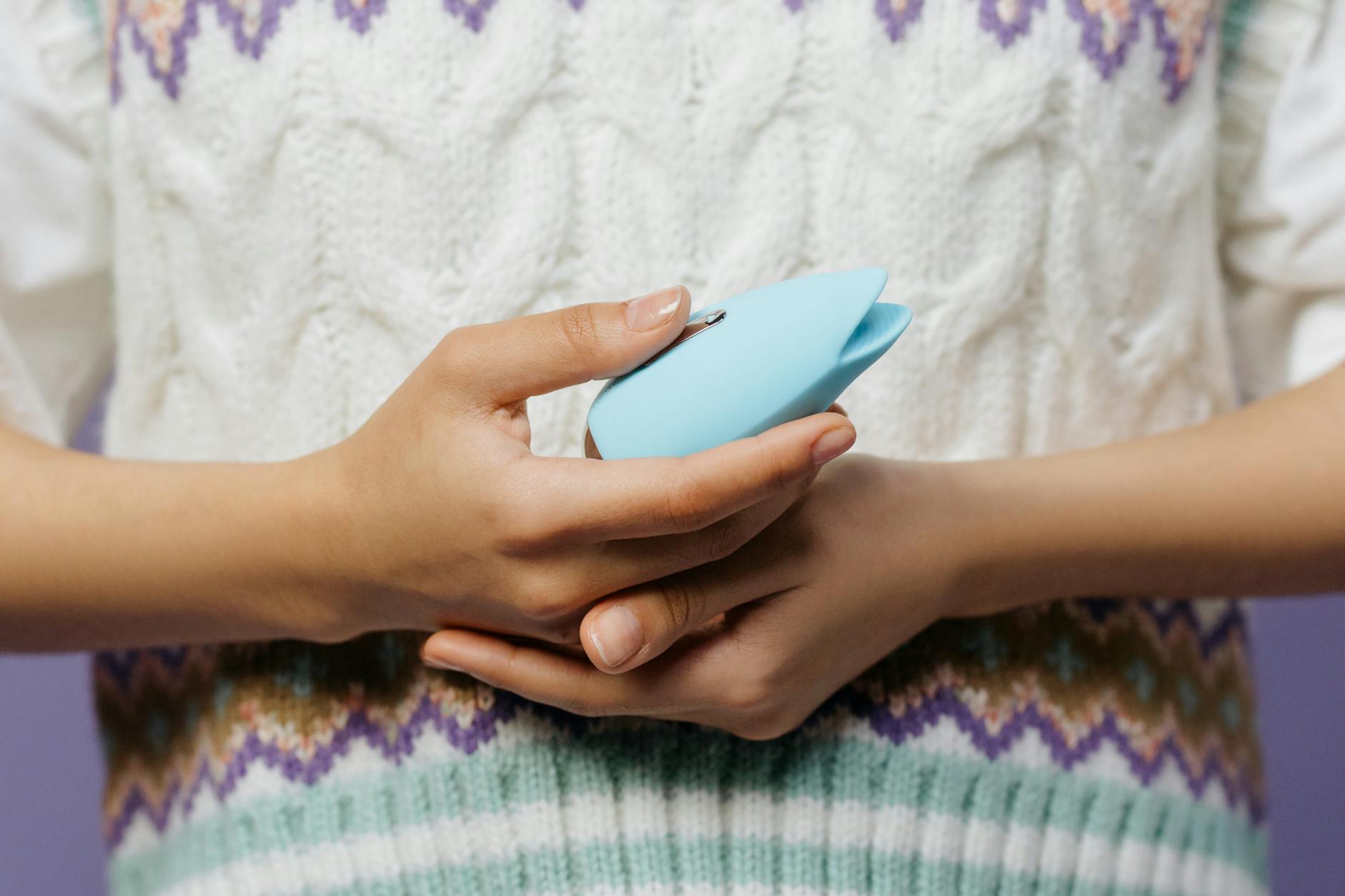
Photo by cottonbro studio on Pexels
Settings that calm your nervous system
Not all vibration patterns are equal when you're anxious. Your nervous system needs predictability.
Start on pattern one or two. Lower intensity. Slow rhythm. Avoid patterns that feel chaotic or jump around randomly. Your brain is already overstimulated. Give it something you can anticipate.
Once arousal builds and anxiety drops, you can experiment with faster patterns or intensity increases. But the early phases? Keep it simple. Steady. Boring, almost.
The role of lubrication in anxiety recovery
Anxiety causes dryness. Your body isn't producing natural lubrication because blood flow is redirected. Using lube isn't a sign something is wrong. It's a practical accommodation.
Water-based lube works best with the Lem Vibrator. It reduces friction, which means less physical irritation and fewer false signals to your anxious brain that "something is wrong down there."
When to bring your partner into the vibrator experience
There's no timeline. Some people need three weeks of solo practice. Others need three months. The marker is not orgasm. It's when you notice your body can stay aroused without spiraling into anxiety.
When that happens, you might try:
Using the lemon vibrator while your partner touches you elsewhere. Or having them hold the vibrator while you guide the pressure. Or using it during foreplay before partnered sex. Each of these reintroduces the partner's presence without triggering the full performance pressure.
Anxiety doesn't mean you're broken
It means your body learned that partnered sex feels unsafe. That's a learnable response, which means it's unlearnable too. A lemon vibrator isn't a fix-all. But it is a concrete, embodied way to retrain your nervous system.
You deserve partnered sex that feels good. Not someday. Now. The work you do solo builds the foundation for that.
People also ask
Can you use a lemon vibrator during partnered sex if you have anxiety?
Absolutely. In fact, many people find that bringing the vibrator into partnered sex makes the whole experience less anxious. You have a source of consistent pleasure you control, which takes pressure off your partner to "make it happen" and off you to perform. Start with the vibrator on you while your partner enters, or use it during foreplay while your partner touches you elsewhere. The combination often feels safer than penetration alone.
How long does it take for anxiety-related arousal shutdown to improve?
Every nervous system is different, but most people notice a shift within 2-4 weeks of consistent solo practice with a vibrator. The key word is consistent. Once a week won't rewire much. Three to four times a week shows measurable change. That said, if anxiety stems from relationship conflict or trauma, consider working with a therapist alongside vibrator use.
Is it normal to feel nothing the first time you use a lemon vibrator when anxious?
Completely normal. Your nervous system is in protection mode. Sensation is muted as a defense mechanism. That numbness usually lifts within a few sessions as your body learns that pleasure is safe. If numbness persists for more than a few weeks, check in with yourself about whether something deeper is going on in your relationship or your mental health.
Should you tell your partner you're using a vibrator for anxiety?
I recommend it, yes. Not because you owe them access to your solo time, but because anxiety often comes from unsaid things. When your partner knows you're working on rebuilding confidence, they can support that instead of wondering why you're pulling away. A simple "I'm using this tool to help myself feel better about sex" is enough.
Can lemon vibrators help with anxiety during partnered sex specifically?
Yes, but only if you've done solo groundwork first. If you've never used the vibrator alone and you introduce it during partnered sex, you might still carry the anxiety. The partner is still there. The pressure is still there. Solo practice builds the neural pathways. Then the vibrator in partnered space becomes a confidence boost, not a panic button.
What if the vibrator itself causes anxiety?
That's data. Some people feel more pressure when there's a "tool" involved, like they should perform or come faster. If that's you, slow way down. Use it for 30 seconds at a time during exploration. Let yourself have zero expectations. Or try a different approach altogether, like focusing on partnered oral sex or hand stimulation without a vibrator. Anxiety is individual. What works for someone else might not work for you, and that's fine.
Moving forward
Anxiety around partnered sex is one of the most common things I see in my practice. It's also one of the most treatable. Your body isn't broken. It's just protecting you. A lemon vibrator is a tool to tell your nervous system that pleasure is safe again. The rest builds from there.
If you want to explore this more with personalized guidance, get in touch with us. We're here to help you rebuild confidence, one session at a time.