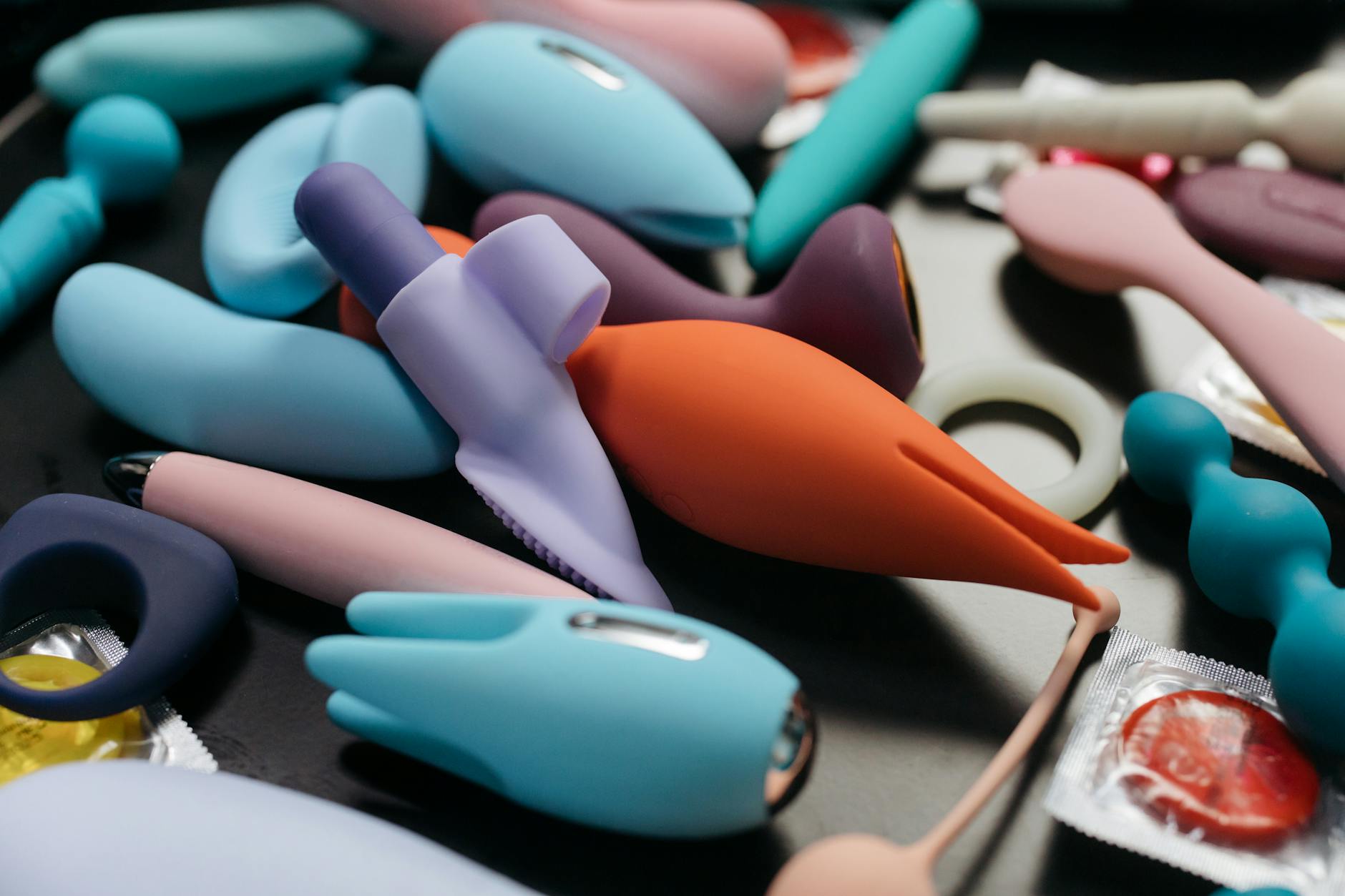
Let's talk about what happens when pleasure goes quiet
Ten years in, fifteen, twenty. The sex is fine. Predictable, maybe. But fine. Then one day you realize you barely feel anything anymore. Not pain. Not arousal. Just... numbness.
This isn't a sign the relationship is broken. It's actually a sign that your nervous system has gotten very, very efficient at tuning out.
Why long-term relationships flatten sensation
Here's what I see in my practice constantly: when the same touch happens the same way in the same sequence for years, your brain literally stops paying attention to it. It's called habituation, and it's a survival mechanism. Your nervous system decided, "We've got this one handled," and downregulated responsiveness to protect bandwidth for new threats.
Meanwhile, your partner is probably experiencing the same thing from their side. So both of you are going through the motions with a partner who feels less and less responsive, which makes them feel less desired, which makes them touch less intentionally, which deepens the numbness. It's a feedback loop that looks like emotional distance but actually starts neurologically.
The physical part: your body adapts to consistent stimulation. If your partner's touch has been light and predictable for years, your nerve endings stop firing as readily. Your clitoris, which has thousands of nerve endings, becomes desensitized to that specific pattern. Your arousal timeline stretches. Your orgasms, if they still happen, feel distant or muted.
This is not a character flaw. This is neuroscience.
Why a Lem vibrator works differently than your partner's hand
A clitoral vibrator, especially an air-suction device like the Lem, works on your nervous system in ways a human hand cannot. The stimulation is novel, which means your brain actually pays attention. It's also rhythmically consistent in a way that human touch isn't. That combination jolts your nervous system out of habituation and reawakens sensitivity.
When you use a lemon clitoral vibrator solo or with your partner, you're not replacing the relationship. You're breaking the numbness cycle. You're reminding your body what pleasure actually feels like. Once that pathway lights up again, many couples report that partnered touch feels new again too.
The lemon suction vibrator is particularly helpful because it doesn't require the kind of direct friction that can feel one-dimensional after years of the same sensation. Air-pulse stimulation activates a broader network of nerve endings and creates a qualitatively different sensation. After months of the same touch, that difference alone can feel revelatory.
How to introduce a Lem vibrator back into partnership
The conversation matters more than the toy. "I've noticed our sex life has felt a bit flat for me lately, and I think some of it is that my body has adapted to the same rhythm. I'd love to try something that helps me feel more. This isn't about you. It's about reawakening what I know we're both capable of."
If your partner gets defensive, that's telling you something about their own insecurity, not about the vibrator. Many people fear that introducing a toy means they're not enough. Some therapy or a few honest conversations usually untangle that.
Then: use it solo first. Spend two to three weeks rediscovering what your body feels like on its own. Notice which patterns actually turn you on versus which ones you've just gotten used to. Pay attention to your arousal cues. This isn't selfish. This is research for your partnership.
After that baseline, use the Lem with your partner present. Not as a replacement for them, but as something you're both choosing together. Let them hold it, or hold it yourself while they touch you elsewhere. The combination of novel clitoral stimulation plus familiar touch elsewhere in your body creates a new sensory experience.
The emotional part, which matters just as much
Disconnection from pleasure in long-term relationships often has as much to do with emotional distance as neurological adaptation. If you're resentful, if there's been betrayal, if one or both of you has checked out emotionally, no vibrator will fix that.
But if the foundation is solid and the numbness is purely sensory habituation, a vibrator becomes a tool for rebuilding presence and attention. It says, "We're going to do this differently. We're going to pay attention to each other and to ourselves again."
Sometimes reconnection doesn't happen during sex. It happens in the conversation beforehand. It happens when you admit you've been faking pleasure to keep the peace. It happens when your partner says, "I want you to actually feel good, and I'm willing to try something new to make that happen."
Practical steps for using a lemon vibrator to rebuild sensation
Start at the lowest setting. If you've been numb for months or years, your body needs time to remember how to respond. Rushing to intensity often backfires. Use patterns 1 or 2 on the Lem and let yourself have a slow, gradual warm-up over ten to fifteen minutes.
Use it consistently, not occasionally. Sensation rebuilds through repeated novel stimulation. If you use a clitoral vibrator once every three months, your nervous system doesn't reorganize. If you use it two to three times weekly, you'll notice a shift in about six weeks.
Talk during the experience. "That feels good." "A little lower." "Slower." This communication rebuilds the habit of being present and attentive with your partner.
After orgasm or after finishing, spend five minutes talking about what you felt, what was different, what you want to try next. This is where the real reconnection lives.
What changes when you stick with it
After six to eight weeks of consistent use, most couples report that regular partnered touch starts to feel different again. Your nervous system, rewoken by novel stimulation, becomes more responsive overall. Your arousal timeline shortens. Your orgasms feel deeper. And because you've been communicating about pleasure during vibrator use, you're more likely to communicate about it during partnered sex.
You're also more likely to try new things. Different positions. Different paces. Touch in places you haven't focused on in years. The reconnection doesn't stop at the vibrator. It radiates outward.
Long-term relationships don't have to flatten sensation. They just need intention, honesty, and sometimes a tool that reminds your body what you're actually capable of feeling.
People also ask
How do I bring up using a clitoral vibrator if my partner might feel threatened?
Lead with vulnerability and specificity. "I've noticed I'm not feeling as much lately, and I think my body has just gotten used to the same rhythm. I don't want to carry that numbness into our sex life. I'd like to try a clitoral vibrator, and I'd love for you to be part of that." Frame it as something you're doing together to improve the experience for both of you, not as a replacement for them. Many partners feel relieved when they learn the issue isn't about attraction or desire toward them.
Can using a vibrator make me dependent on it for orgasm?
Not in the way people fear. What actually happens is your nervous system becomes responsive to novel, consistent stimulation. This doesn't ruin your ability to orgasm from other types of touch. It actually rebuilds baseline sensitivity, which often improves your response to partnered sex. If you stop using the vibrator, you won't suddenly become unable to orgasm from your partner's touch. You'll just return to your baseline responsiveness from before.
What if my partner wants to use the vibrator on me but I'm uncomfortable with that?
Stay uncomfortable for a minute, then explore why. Is it vulnerability around being "out of control"? Fear that they'll judge you? Worry that they won't use it the way you like? Those are all legitimate, and they're also all addressable through conversation. Start solo, build confidence in how the vibrator feels on your body, then invite your partner in at whatever pace feels right. You're in control of the speed.
How often should I use a lemon vibrator if I'm trying to rebuild sensation with my partner?
Two to four times weekly is the sweet spot. This gives your nervous system enough repetition to notice novel stimulation without making it feel like a chore. Some couples make it part of their regular sex routine. Others use it twice a week solo and once a week together. The consistency matters more than the frequency.
Does a Lem vibrator work differently than other clitoral vibrators for reconnection?
Air-pulse vibrators like the Lem activate a broader network of nerve endings because the suction mechanism is fundamentally different from traditional vibration. This makes the sensation feel qualitatively novel, even if you've used vibrators before. If your body has been habituated to the same partner touch for years, that novelty is exactly what your nervous system needs to wake back up.
What if we reconnect and then drift apart again after a few months?
It happens. Reconnection isn't a one-time fix. It's a skill you rebuild by staying intentional. Many couples rotate between regular sex and sex that includes a vibrator. Some make it a permanent part of their routine. Others notice that once the numbness breaks, regular touch becomes more satisfying and they don't need the vibrator as often. Listen to what your body is telling you and adjust accordingly.
The bridge back
Disconnection after years together isn't failure. It's just what happens when the nervous system gets efficient at tuning things out. A Lem vibrator isn't a band-aid. It's a tool that helps you both remember what pleasure was like before habituation set in. From there, if the relationship has a solid foundation, reconnection usually follows naturally. You just needed your body to remember how to feel.