Let's be real about the elephant in the room
Adding a vibrator to partnered sex doesn't mean something is broken. It means you want more. More intensity, longer duration, deeper sensation, or simply a different flavor of pleasure than penetration or manual stimulation alone can deliver. That's not a sign of inadequacy. That's actually how couples build better sex.
The tricky part isn't the vibrator itself. It's the conversation that has to happen first, and then the logistics of actually using one together without anyone feeling sidelined or replaced. I work with couples every week who have the toy but aren't using it right, so it sits in a drawer collecting resentment instead of pleasure.
Here's what I've learned works.
The conversation comes before the toy
This is non-negotiable. A clitoral vibrator is not a surprise. Not ever.
The conversation doesn't have to be formal or clinical. But it does need to happen when you're both dressed, calm, and not in the middle of sex. Ideally a few days before you actually plan to use it together. Something like: "I want to try using a vibrator during sex because I think it could help me have stronger orgasms, and I'd love for you to be part of that." Then listen.
If your partner is nervous, that's normal. Common concerns: they feel replaced, they worry they're not "enough," they're unsure of their role. Address each one directly. "A vibrator isn't about you being inadequate. It's about adding a sensation I can't create alone. I want you inside me (or touching me) while I use it." That changes the narrative from replacement to collaboration.
If your partner is enthusiastic, great. But also clarify expectations. Will you use it during penetration? Only during foreplay? Will they control it? Will you? How do you want to communicate if something doesn't feel good? These questions prevent awkward fumbling and unmet expectations at the critical moment.
Positioning matters more than you'd think
This is where most couples get stuck. You can't just introduce a vibrator the way you'd introduce a hand. The positioning shifts everything.
For penetrative sex: the person with the penis or dildo enters from behind (spooning position or standard from-behind penetration), and you hold the vibrator against your clitoris yourself. This is genuinely the easiest setup because you control pressure and angle. Your partner stays fully engaged because they're inside you, feeling your responses, adjusting their depth and pace. They're not fumbling with a foreign object; they're doing what they already know how to do.
Alternatively, if you're comfortable with your partner controlling the vibrator, you can lie on your back during penetration, and they use it while moving inside you. This requires more coordination because they're managing three things at once. Start with them on a lower intensity setting and work up.
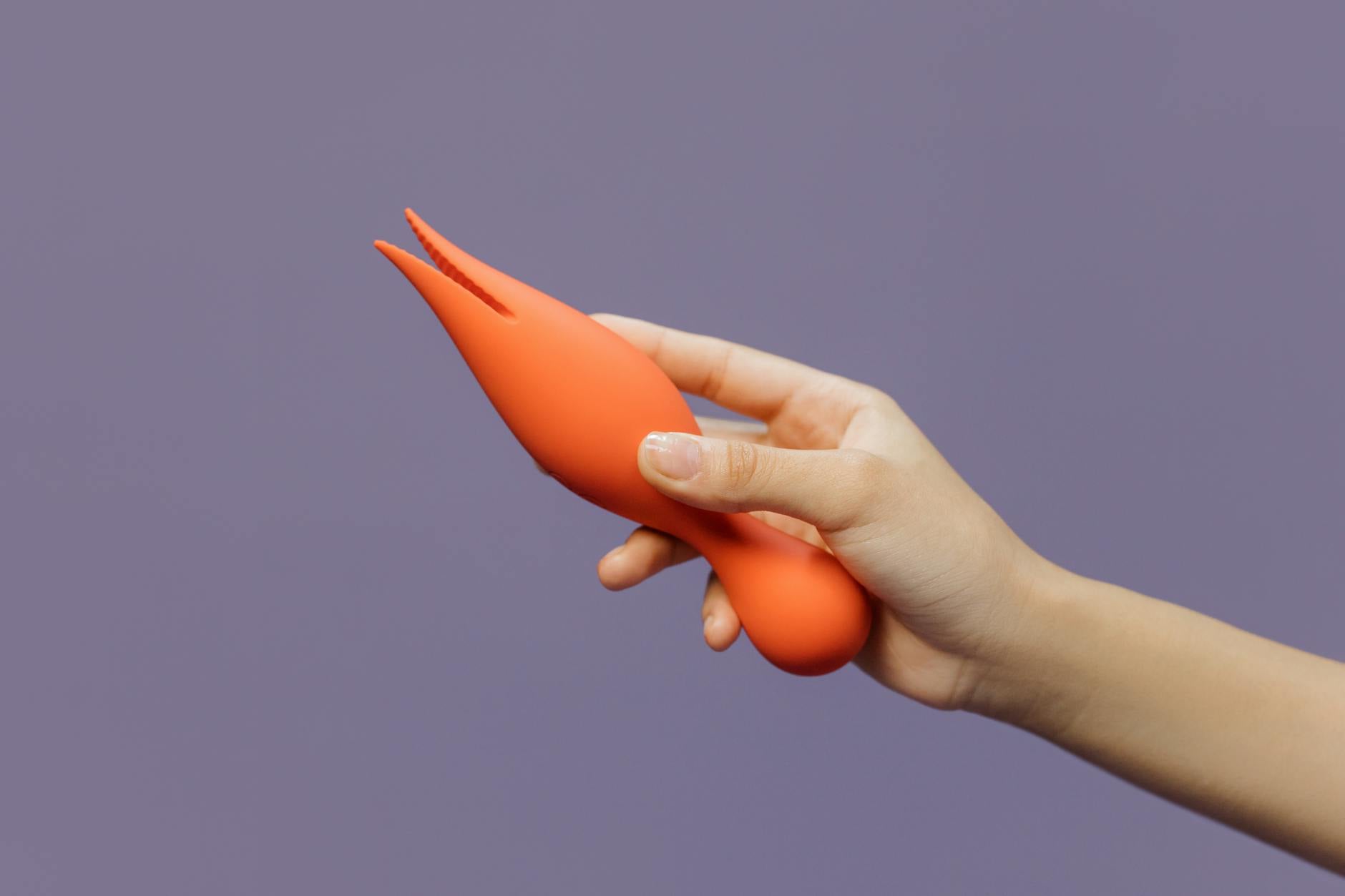
For foreplay: this is where lemon vibrators (the air-suction or gentle clitoral stimulators) shine. Your partner can use it on you while kissing you, touching you, or penetrating you with their fingers or a toy. The closeness stays intact because it's still their touch plus the vibration, not the vibration replacing them.
The rhythm conversation
Orgasms with a vibrator often feel different than orgasms without one. Stronger, sometimes more localized, sometimes more waves than a single peak. Your partner might get worried if they can't feel the orgasm the way they usually can.
Talk about this in advance. Let them know what a stronger orgasm might look like for you. Are you likely to be quieter or louder? Will your body tense differently? Will you want them to keep moving or stay still? Will you need them to keep the vibrator going through the orgasm, or stop right before?
These details matter because rhythm is how partners stay connected. If your partner is thrusting deeper right when you need lighter pressure, or stopping movement right when you're building toward release, the vibrator can actually feel isolating instead of amplifying.
The best approach: start with them at a medium pace and intensity. Let them watch what happens. Most partners figure out the rhythm within a few minutes once they see your body's actual response instead of imagining it.
Intensity is not always your friend
Here's the thing about lemon clitoral vibrators: they're strong. If you've been using one solo and building tolerance, you might grab a high intensity setting and expect the same result during partnered sex. It often backfires.
When you're with a partner, your nervous system is processing more information at once. Someone's inside you. Someone's touching you elsewhere. You might be more mentally present but also more easily overwhelmed by too much sensation. Many people find they need a lower intensity setting with a partner than they use alone.
Start at pattern 1 or 2, even if that feels boring when you're solo. Let the vibration be a layer on top of the other sensations, not the whole show. You can always increase intensity, but jumping too high too fast can numb sensation or make the whole experience feel janky instead of integrated.
Timing your orgasm versus theirs
One of the biggest myths about partnered sex is that orgasms should happen at the same time. They shouldn't. They often don't. And a vibrator makes this conversation easier, not harder.
If your partner tends to finish before you, a vibrator lets them help you reach orgasm after theirs without it feeling like work. They can hold still inside you, watch you use the vibrator, and enjoy your pleasure. Many partners find this hot. Others like to keep moving gently while you finish.
If you tend to finish first, the vibrator can help you take longer, building intensity gradually instead of cresting fast. Or it can help you have multiple orgasms without stopping, so your partner doesn't feel left hanging.
The key is removing the performance pressure. You're not racing. You're not trying to sync. You're just trying to feel good together, on slightly different timelines.
Communication during sex, not just before
Sex with a vibrator is collaborative in a way that solo sex isn't. That means real-time feedback matters.
Use simple language. "Slower." "Deeper." "Keep doing that." "I need a break." These aren't mood killers. They're actually the exact opposite. Partners who feel clear direction feel less anxious and less likely to retreat into self-consciousness.
If something is uncomfortable (and sometimes it is), stop and adjust. That's normal. If the vibration intensity combined with depth creates a weird sensation, lower one and keep the other. If the angle isn't hitting right, shift your hips. The magic happens through iteration, not perfection on the first try.
When things feel weird or disconnected
Sometimes a vibrator in partnered sex creates distance instead of connection. You're focused on sensation instead of your partner. Or they're focused on the vibrator instead of you. Or the whole thing just feels mechanical.
If that happens, it's usually because the positioning makes one of you feel like a bystander. Fix this by increasing physical contact elsewhere. If you're both clothed below the waist while the vibrator does its thing, you've lost the intimacy. If your partner is using the vibrator while also inside you and kissing you, you haven't.
Alternatively, you might just need a different approach. Maybe you use the vibrator during foreplay to build intensity, then set it aside for the penetration portion. Maybe you use it only during a specific part of sex, not the whole thing. Maybe it becomes an occasional enhancement rather than a regular feature.
The goal isn't to make every encounter the same. The goal is deeper, fuller pleasure when you both want it.
The aftermath matters
After sex with a vibrator, both of you need a moment to reorient. Your nervous system just processed a lot. Their mind might have some thoughts or feelings they didn't expect. That's when connection matters most.
Stay close for a bit. Touch without expectation. Talk if either of you wants to, but you don't have to. "That felt good" is enough. If something didn't work, that's also a conversation for right then, while you're both calm. "I want to try a different position next time" or "I need less intensity" are things to note and adjust next round.
Over time, using a vibrator with a partner becomes normal. It's not a big production. It's just another option in the toolbox, pulled out when you both want deeper sensation and longer, more intense orgasms.
FAQ: Common questions about vibrators and partnered sex
Does using a vibrator mean my partner isn't satisfying me?
Not even slightly. A vibrator does one thing: vibrates. Your partner does everything else. They create emotional safety, physical presence, intimacy, and specific sensations that no vibrator can replicate. A clitoral vibrator is an addition, not a replacement. Think of it like adding an instrument to a band, not replacing the lead singer.
How do I bring this up without making my partner feel bad?
Frame it as something you want for yourself, not as something missing in the relationship. "I've been wanting to explore stronger orgasms, and I think using a vibrator together could be really hot" is different from "I need this because you're not enough." One is an invitation. One is a criticism. Say the first.
What if my partner is uncomfortable or refuses?
Honor that. You can't push someone into sex stuff they're not ready for. But also ask why. Is it jealousy? Insecurity? A different comfort level with sex in general? Understanding the root makes it easier to address. Sometimes it's about finding a compromise (use it during foreplay only, or they control it so they feel involved). Sometimes you just wait until they're ready.
Can I use a lemon clitoral vibrator during all types of partnered sex?
Almost. The main exception is positions where someone is lying on your clitoris. Otherwise, there's usually a way to integrate it. Spooning, missionary, reverse cowgirl, woman-on-top, kneeling positions, standing sex. The vibrator is flexible enough to work with most setups.
Does it take longer to have an orgasm with a partner and a vibrator than alone?
Actually, no. For many people, it's faster because the combination of penetration plus vibration plus emotional connection creates a kind of stacking effect. Your nervous system reaches threshold sooner. But some people do take longer because there's more mental processing happening. Pay attention to your pattern and adjust expectations accordingly.
What if my clitoris gets too sensitive during partnered sex with a vibrator?
Lower the intensity immediately. Sometimes adding sensation paradoxically means reducing intensity because your nervous system is already getting more input. You're not failing. You're just recalibrating. Use a lower pattern, add more lube, or take the vibrator off and come back to it in a few minutes.
Is it weird that partnered sex with a vibrator feels totally different than solo use?
Not at all. Your entire nervous system state is different. You're more aroused but also more present with another person. Your body responds differently. This is actually really common and totally normal. Lean into the difference instead of expecting the solo experience to translate exactly.
The deeper truth
Using a lemon vibrator with a partner is about more than orgasms. It's about curiosity. It's about choosing each other in a moment of vulnerability. It's about being willing to explore what makes both of you feel good instead of settling for what's familiar.
That kind of openness changes a relationship. Not because the vibrator is magic. But because you both showed up willing to be a little awkward, a little exposed, a little willing to get it wrong before you get it right.
That's where the deeper connection actually lives.