Let's talk about the stamina question nobody asks
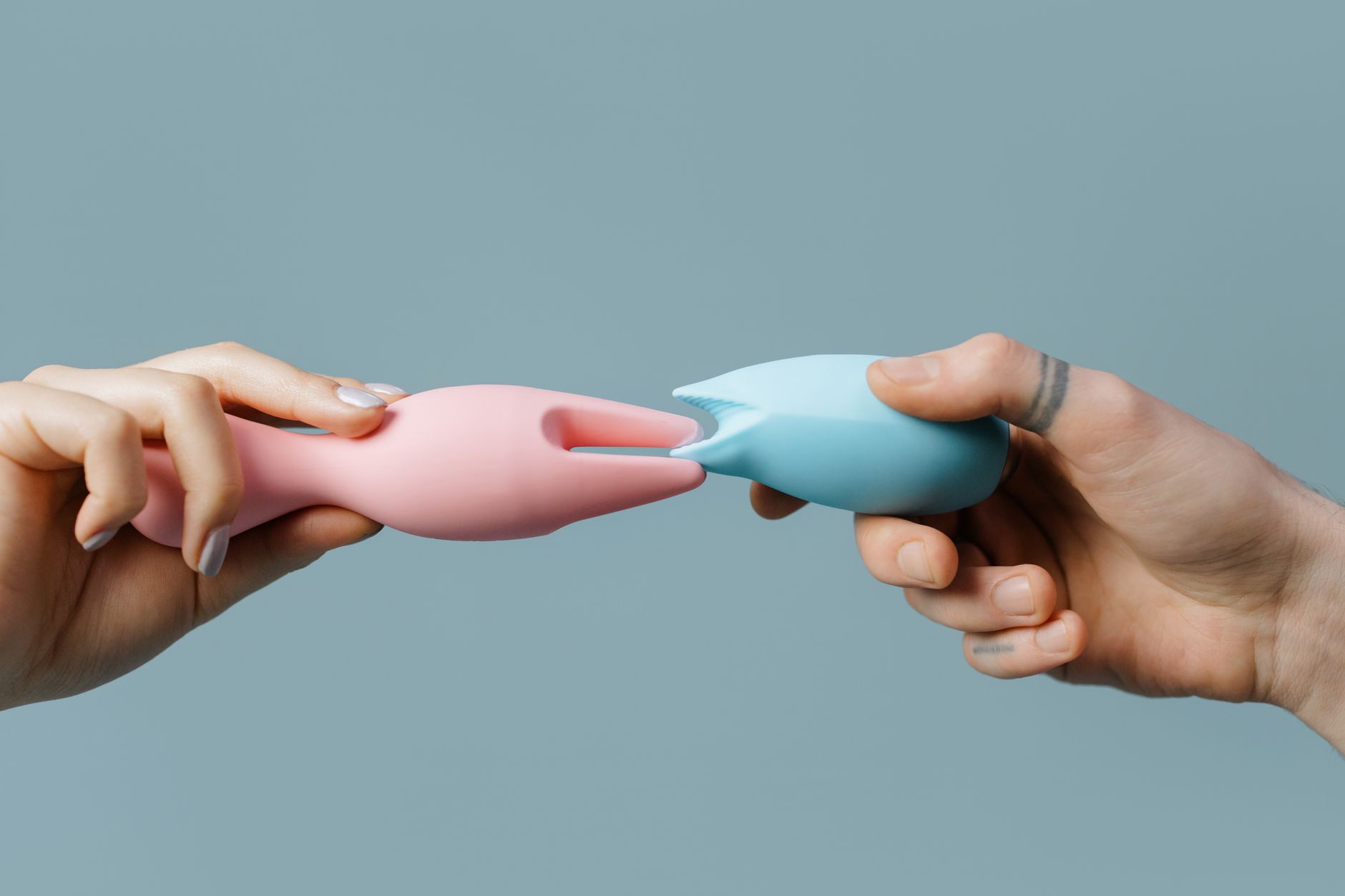
Here's the thing: lasting longer during partnered sex isn't actually about willpower or breathing techniques (though those help). It's about understanding your own arousal arc well enough to pace yourself. And honestly, that's where a lemon vibrator becomes wildly useful.
When you know exactly how your body responds to specific sensations and intensities, you can navigate the whole experience with more control. You're not guessing. You're not white-knuckling through it. You're actually managing your pleasure instead of just hoping it doesn't peak too fast.
The pacing problem most people face
Quick arousal isn't a flaw. It's actually pretty common, especially if you've been conditioned to finish quickly or if you're sensitive to a particular type of stimulation. The issue is that partnered sex has a different timeline than solo play. Your partner's arousal, their rhythm, their needs. These create friction (both literally and figuratively) when you're operating on different schedules.
A lemon vibrator lets you separate your clitoral stimulation from penetrative movement, which changes everything. Instead of ramping up toward orgasm the moment penetration starts, you can control your own intensity independently. You're not riding someone else's pace. You're managing your own.
How to use this to your advantage before sex starts
Two things happen when you do this regularly:
First, you build a mental map of your own arousal. You know that pattern 1 keeps you interested but not escalating. You know that pattern 3 takes you toward the edge. You know exactly how long you can hold at pattern 2 before momentum builds. That knowledge is power.
Second, you train your nervous system to tolerate sustained stimulation without immediately pushing toward orgasm. Think of it like cardio. Your body learns that sensation doesn't always mean climax is imminent. There's a middle ground between barely touched and about to come, and you can camp out there.
Spend solo time with your Lem finding these intervals. Use lower patterns. Notice when you want to skip ahead and don't. This sounds tedious, but it genuinely rewires your response over time.
Edging as a rehearsal tool
Let's be clear: edging isn't denial. It's practice.
When you edge with a lemon vibrator, you're teaching your body to recognize the peak without going over it. You build to that edge, pull back slightly (drop the intensity or pause), breathe, feel the sensation settle, then build again. You're not stopping completely. You're just managing the pressure.
Do this for 10 to 20 minutes during solo sessions. You might edge three or four times before you actually decide to come. What this teaches you is control. You learn that the peak isn't a cliff you fall off of involuntarily. It's a place you can approach and retreat from intentionally.
When you're with your partner later, that skill transfers directly. You recognize the sensation building and you know how to slow your breathing, shift your attention, maybe change angles or intensity. You've practiced the move a hundred times alone, so your body knows how to execute it under pressure.
During partnered sex: how to integrate your Lem
There are a few clean approaches here, depending on your relationship and what feels good.
One: use your Lem during foreplay while your partner is there, so they can see how you respond and understand your control system. This isn't weird. It's actually clarifying. They see when you back off, when you press the Lem harder, where the edge is. They can watch your breathing shift. This gives them concrete information about your arousal that's usually invisible.
Two: use it during partnered sex itself. If you're in positions that allow it, the Lem is designed to work alongside penetration. This means your partner is experiencing their own stimulation while you're managing yours independently. You're not waiting for your body to catch up. You're controlling your own timeline.
Three: use it as a cooldown between rounds. If you've come close to climax and want to extend the session, stepping back with your Lem on a lower pattern helps you stay engaged without tipping over. You can do this multiple times in one session, which genuinely does extend things.
The conversation you actually need to have
If you're doing this with a partner, talk about it beforehand. Not in a clinical way. Just straightforward: "I want to last longer and feel more in control. I'm going to use my Lem during. It's not instead of you, it's in addition. It helps me stay on my own timeline."
Most partners genuinely appreciate this because it takes pressure off them. They're not responsible for managing your arousal. You are. That's actually less work for them and more pleasure for both of you.
If your partner gets uncomfortable with it, that's worth exploring separately. But usually the resistance is just unfamiliarity. Once they see that it genuinely does extend things and makes you more present, it becomes part of your normal rhythm.
Pattern selection matters more than you think
Different patterns create different sensations. Some feel more rhythmic and building. Others feel scattered or plateauing. You want to choose patterns that give you sustained stimulation without dramatic intensity spikes.
Patterns 2 through 4 are usually your friend here. Pattern 1 is too gentle for this purpose, and patterns 5 and above climb too quickly toward orgasm. Find the pattern that feels engaging but controllable, and stick with it during sessions focused on duration.
The Lem's suction design is actually ideal for this because suction feels different than vibration. It doesn't escalate as aggressively. It's more like a building pressure than a climactic push. This gives you more runway before you hit the edge.
Building your personal stamina baseline
When you're starting this work, track what's actually happening. How long into partnered sex do you typically approach the edge? After starting solo with your Lem and doing edging work, how long are you lasting now? What's the difference?
You might discover you can extend things by 5 minutes, 15 minutes, or longer. The point isn't to hit some arbitrary time. It's to notice your own improvement and understand what's actually working.
If you're lasting longer because you're managing your own clitoral stimulation independently, that's progress. If you're lasting longer because you built better control through edging practice, that's also progress. Both things are usually happening simultaneously.
When duration isn't the real issue
Honestly though, sometimes "I'm coming too fast" is actually "My partner and I aren't synchronized" or "I feel rushed" or "I don't feel present." Those are different problems that need different solutions.
If you've genuinely built control and stamina with a Lem through solo practice and partnered integration, and things still feel off, it might be worth examining the relationship dynamics underneath. Are you feeling pressure to perform? Is your partner's pleasure the priority while yours is secondary? Are you actually enjoying the experience or just trying to check boxes?
Stamina techniques work when the goal is mutual pleasure and presence. They fall flat when there's deeper friction in the relationship. I'd gently suggest reading about how to use lemon vibrators when partnered sex has become predictable if this resonates, because that addresses some of the relationship rhythm stuff alongside the technique piece.
One more thing: this is learnable
Nothing about this requires you to be a certain way naturally. Control is a skill you build. Endurance is trainable. The fact that you're thinking about this means you're already oriented toward improvement, which is honestly the hardest part.
Your body isn't broken if you come quickly. It just needs direction. And a lemon clitoral vibrator is a genuinely effective tool for giving it exactly that.
Frequently asked questions
How long does it take to actually build stamina with a Lem?
Most people notice a shift within two to four weeks of consistent solo practice. That's edging sessions two or three times per week. You'll probably feel a difference in awareness first. Like, you'll be able to recognize the edge more clearly. Actual extension usually follows within a few more weeks.
Can I use a lemon vibrator if my partner is uncomfortable with toys?
That discomfort is worth discussing separately from the stamina goal. Often people worry that toys mean their partner isn't satisfied. In reality, a Lem is just a tool for you to manage your own pleasure better, which usually improves the experience for both of you. You might start by using it solo and sharing how it changes your self-awareness, then introduce it into partnered sex once they're less anxious about it.
What if I get overstimulated during edging practice?
You're probably practicing at too high an intensity. Drop to pattern 1 or 2 and stay there longer. The goal isn't to get close to the edge every session. Some sessions should just be about sustained, manageable sensation. Think of it like strength training. You need warmup sessions and light sessions, not always heavy ones.
Does lasting longer feel less good?
Actually, extended sessions often feel better because you're more present and intentional. You're not rushing toward climax. You're actually enjoying the sensations along the way. Many people report their orgasms feel more intense after longer buildup, which makes sense physiologically.
Should my partner be doing something specific while I use my Lem?
Not necessarily. This depends on positions and what feels good. In some positions, they can continue their own rhythm while you manage your stimulation. In others, you might focus on clitoral work while they slow down and prioritize connection over movement. It's worth experimenting and communicating as you go.
Can I combine this with other techniques like breathing or position changes?
Yes. All of these things work together. The Lem gives you specific physical control. Breathing keeps your nervous system calm. Position changes can alter stimulation intensity. Using them in combination is more effective than any one alone.