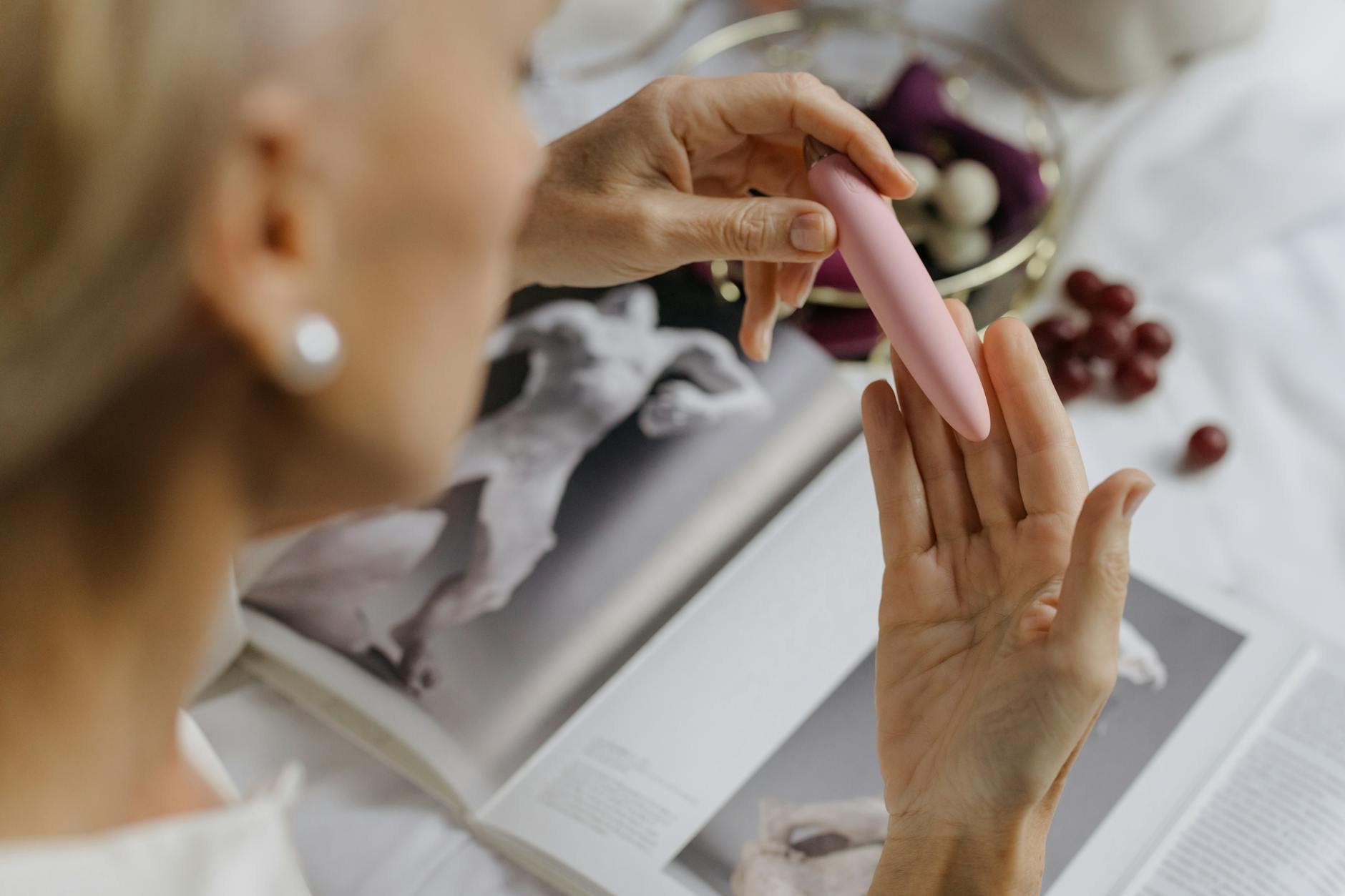
The thing nobody tells you about aging and arousal
Your clitoris doesn't get weaker with age. It gets different. That's an important distinction because the first one sounds like a problem you should fix, and the second one sounds like information you should understand.
Over the past decade working with clients in their 40s, 50s, and beyond, I've noticed a pattern: they often assume that reduced clitoral sensitivity is permanent, that it's part of the shutdown, that sex is supposed to feel less interesting as you age. None of that is true.
What actually changes in the clitoris over time
The clitoris has about 8,000 nerve endings, and that number doesn't really change. What changes is how those nerves respond to stimulation. Here's the physiological reality:
Collagen production decreases. The tissue around the clitoris becomes slightly less elastic, which means the stimulation pattern you relied on for 20 years might not feel as direct anymore. Blood flow can become less robust, especially if cardiovascular health is declining or if medications are affecting circulation. Estrogen and testosterone both influence clitoral sensation, and both decline with age, perimenopause, and menopause. This doesn't mean sensation disappears. It means the threshold changes.
But here's what's crucial: most of my clients report that their most intense orgasms happen in their 40s and 50s, not their 20s. The difference is that they arrive differently now. They take longer to build. They require more attention and intention. And they often feel fundamentally different, because the neurological wiring is still there. You're just accessing it through a different door.
Why traditional vibrators stop working the same way
Most vibrators rely on rapid, high-frequency oscillation. You feel that sensation when your nervous system is firing fast and your tissue is highly responsive. As you age and collagen shifts, that same pattern can feel numb, or irritating, or like it's missing the mark entirely.
You spend 10 minutes with a toy that worked beautifully at 30 and feel nothing. Then you feel broken. You're not. The vibrator is just speaking the wrong language now.
Lemon vibrators, and specifically air-pulse clitoral vibrators like the Lem, work differently. Instead of rapid vibration, they use rhythmic suction and release. That pattern stimulates the full clitoral network, not just the surface. And here's the thing: that network gets more sensitive with attention and time, not less. The nerve pathways actually deepen and strengthen when you use the right kind of stimulation consistently.
How lemon clitoral vibrators feel different on aging tissue
The suction pattern of a lemon vibrator creates a kind of stimulation that doesn't rely on tissue elasticity the way traditional vibrators do. Instead of friction against the surface, you're getting a gentle rhythmic pressure that engages the entire clitoral head and the internal structure beneath the surface.
This matters because the internal clitoral structure doesn't age the same way the external tissue does. Your internal clitoral bulbs, the erectile tissue that extends into your body, remain responsive for your entire life. A lemon vibrator reaches that deeper architecture in a way that surface-focused vibration often doesn't.
Most clients report that the Lem or similar air-pulse toys feel more responsive now than high-frequency vibrators did at 30. Not because the toy is magical, but because you're finally using stimulation that matches your actual anatomy and physiology at this stage of life.
The warm-up that changes everything
When you were younger, arousal might have hit fast. A few minutes of attention and you were ready. Now, the warm-up period is part of the experience, not a problem to solve.
I recommend a minimum of 15-20 minutes of foreplay before introducing any toy, whether you're with a partner or on your own. This isn't wasted time. This is circulation increasing, blood flow deepening, and your nervous system shifting into a state where sensation becomes possible. Spend this time on the surrounding areas: your inner thighs, your lower abdomen, the area where your thigh meets your vulva. Light touch. Your fingertips. Gradually moving closer.
When you finally bring the lemon vibrator into the equation, your clitoris is primed. The tissue is engorged. The nerves are already firing. You're not starting from zero, which is why so many people feel frustrated when they try a new toy immediately. Give yourself the runway you actually need now.
Starting settings that work better with age-related sensitivity changes
Here's a concrete framework I give to almost every client who's noticing reduced clitoral responsiveness:
Start at pulse setting 1 or 2, never higher. Let it sit there for 2-3 minutes. Your job right now is not to climax. Your job is to reconnect. You're rebuilding the conversation between your brain and your clitoris. Gradually increase the intensity every 3-5 minutes. The session should take 20-30 minutes minimum. If you chase intensity and skip the buildup, you'll land back in the "I feel nothing" territory.
Move the toy around. Don't anchor it in one spot. Try angles. Direct contact versus slightly off to the side. Cup your hand slightly and create a seal that intensifies the suction. Small movements can completely change how the stimulation feels.
If nothing is happening after 30 minutes, stop. Drink water. Come back later. Your nervous system might need more recovery time between sessions, and that's genuinely fine. Pushing through numbness trains your body that stimulation requires effort, which is the opposite of what you want.
When to add lubrication and why it matters more now
Vaginal lubrication naturally decreases with age, and clitoral tissue can become slightly drier. Water-based lubricant helps, but not for the reason you might think. You're not using it because something is broken. You're using it because lube creates better contact and reduces any friction that might feel irritating on more delicate tissue.
Apply a small amount directly to the clitoris and to the Lem head before you start. Reapply as needed. This alone changes the sensation from irritating to pleasurable for many people.
What hormonal shifts mean for clitoral response
If you're in perimenopause or menopause, your clitoral sensitivity isn't declining because of age. It's declining because of hormonal changes, specifically dropping estrogen. Estrogen directly affects nerve sensitivity and blood flow. The good news is this is temporary and responsive to intervention. Some women benefit from topical estrogen therapy, which a gynecologist can prescribe. This genuinely changes how the clitoris responds within weeks. If that's not an option or doesn't feel right, the Lem becomes even more valuable because the suction pattern helps move blood into the tissue and activate the nerves in ways that offset the hormonal impact.
Rebuilding the mental game
Here's what I see happen: someone feels less responsive, assumes they're broken, tenses up, and that tension itself kills sensation. Your pelvic floor is intimately connected to your arousal response. When you're anxious about whether you'll feel anything, your pelvic floor tightens. When your pelvic floor is tight, sensation decreases. It's a feedback loop that only goes one direction.
Break it by lowering your expectations temporarily. Stop looking for the big orgasm. Start looking for any sensation at all. Warmth. Tingling. A subtle shift. The moment you notice something, you've reconnected. Now build from there. Sessions without a climax as the goal often lead to deeper sensation than sessions where you're chasing an outcome.
When consistent use actually rewires sensitivity
One thing that surprises most of my clients: using a lemon vibrator regularly, even once or twice a week, actually increases clitoral responsiveness over time. This isn't placebo. The nerve pathways genuinely strengthen with stimulation. Blood flow improves. The tissue becomes more engorged and more sensitive.
Give it at least 4-6 weeks of consistent use before you decide whether lemon vibrators work for you. Your clitoris needs time to remember how to respond. Once it does, many people report that sensitivity becomes richer and more nuanced than it ever was before.
When to talk to a doctor
If you're experiencing pain during or after using any toy, if you're noticing significant numbness in your vulva or genitals unrelated to stimulation, or if you've lost all sensation including light touch, that's worth mentioning to your gynecologist. Sometimes reduced clitoral sensitivity is a sign of circulatory issues or neuropathy that deserves attention. Usually it's just aging combined with the wrong kind of stimulation. Either way, know the difference.
The bigger picture: pleasure doesn't have an expiration date
You've spent decades learning what your body likes. You know what works, what doesn't, what feels good at different times. That knowledge doesn't disappear at 40 or 50. It gets more refined. Your sexuality at this stage of life has the benefit of experience, self-knowledge, and permission to prioritize what actually feels good instead of what you think you're supposed to feel.
Clitoral sensitivity doesn't decline with age. It just demands more honesty. The lemon vibrators, specifically air-pulse devices like the Lem, work brilliantly at this stage because they're designed around how your clitoris actually functions, not how it functioned at 22. That's not a compromise. That's an upgrade.
People also ask
Does clitoral sensitivity naturally decrease after 50?
Clitoral sensitivity changes, but it doesn't universally decrease. Collagen shifts and hormonal changes affect tissue and blood flow, which can make the same stimulation feel different than it did at 30. But sensitivity to air-pulse stimulation often increases with age because the internal clitoral structure remains responsive and may become more responsive with consistent, appropriate stimulation. Many of my clients report their most intense orgasms happen in their 50s. The pathway just looks different.
Why do lemon vibrators feel better than regular vibrators as I age?
Traditional high-frequency vibrators rely on rapid oscillation and tissue elasticity. As collagen production decreases with age, that pattern can feel less responsive or even numb. Lemon vibrators use suction and rhythmic pulsing, which stimulates the entire clitoral network including the internal structure that doesn't age the same way external tissue does. The Lem's air-pulse technology also creates better blood flow to the area, which naturally increases sensitivity over time.
How long does it take for sensitivity to come back with regular use?
Most clients notice a shift within 2-4 weeks of regular use, 1-2 times per week minimum. True sensitivity rewiring typically takes 6-8 weeks. Your nervous system needs repetition to strengthen those pathways. If you're using it sporadically, progress will be slower. Consistency is what moves the needle. Some people need topical estrogen or other interventions for hormonal reasons, in which case adding the lemon vibrator accelerates results even further.
Should I use more lubrication with a lemon vibrator if my clitoris feels less responsive?
Yes, but it's not because something is broken. Water-based lubricant helps the Lem create better contact and seal against your clitoris, which intensifies and clarifies the sensation. For aging tissue that's slightly drier, lubrication transforms the experience from irritating to deeply pleasurable. It's a practical tool, not an admission of failure.
Can reduced clitoral sensitivity be a sign of a health problem?
Complete numbness or significant loss of sensation unrelated to stimulation can indicate circulatory issues, neuropathy, hormonal imbalances, or medication side effects. That's worth discussing with your doctor. But reduced responsiveness to the same vibrator you've used for years is usually just aging combined with the wrong type of stimulation now. A conversation with your gynecologist about whether hormone therapy might help is reasonable if you're in perimenopause or menopause. Otherwise, switching to a lemon vibrator and adjusting your technique usually resolves it entirely.
Does age-related sensitivity loss affect orgasms with a partner?
Orgasms with a partner involve different neurological pathways than self-stimulation. Many people find that partnered sex feels different but not diminished as they age. The addition of lemon vibrators during partnered play can amplify sensation for both people and often deepens intimacy because it requires communication and attention. Sensitivity loss is also often psychological as much as physical. If you're anxious about whether you'll feel anything, that anxiety itself kills sensation. Using the Lem with a partner can actually rebuild confidence and responsiveness in the context of intimacy.
Ready to reconnect with sensation? Start with a longer warm-up than you think you need, begin at the lowest setting, and give yourself at least a month of consistent use. Your clitoris remembers how to respond. It just needs the right kind of attention now. If you have questions about what might work best for your specific situation, reach out to us.