
Let's start with the obvious part
You started the pill, the patch, the implant, or got a hormonal IUD. Your lemon vibrator suddenly feels like it's running at half power. You check the batteries. They're fine. You wonder if something broke. Nothing did. What changed is your body's neurochemistry, and it's completely normal.
Hormonal birth control is incredibly effective at preventing pregnancy, but almost no one explains what it's actually doing to your nervous system, your blood flow, and the way your clitoris responds to stimulation. The result is confusion, frustration, and a lot of people thinking they've lost their sexuality when really they've just shifted into a different (and often solvable) gear.
How hormonal birth control reshapes sensation
Here's what's actually happening: hormonal contraceptives suppress your natural hormonal cycle by keeping estrogen and progestin levels artificially steady. That's the point. But steady isn't what your clitoris evolved to expect. Your clitoris responds beautifully to the fluctuations that happen across your cycle.
On hormonal birth control, several things change simultaneously:
Blood flow decreases. Estrogen helps regulate blood vessel function and genital blood flow. When you're on the pill or a hormonal IUD, your estrogen levels stay lower and flatter than they do naturally. Lower estrogen means less engorgement of the clitoral tissue. Less engorgement means less sensation and slower arousal. This is why your lemon sucker or any clitoral vibrator might feel duller.
Nerve sensitivity shifts. The clitoris contains roughly 8,000 nerve endings, and their responsiveness fluctuates with your cycle. On hormonal birth control, you're essentially stuck in one neurological gear. For some people, that gear is still responsive. For others (especially those using higher-dose formulations or certain types of IUDs), it feels muted.
Lubrication changes. Your cervical mucus and vaginal lubrication are controlled partly by estrogen and progesterone. On hormonal birth control, mucus production is typically lower and thicker. Dry tissue is less sensitive tissue. It's also more prone to irritation from the suction sensation that makes lemon vibrators so effective.
Arousal ramps up slower. Without the hormonal peaks of your natural cycle, your brain takes longer to reach the threshold where pleasure becomes obvious. You might need 20 minutes instead of 10 to feel genuinely turned on. When you're expecting the Lem to work the way it did before birth control, that delay feels like something is broken.
The layer most people miss: neurotransmitter changes
Beyond the physical changes, hormonal birth control affects dopamine and serotonin regulation. Dopamine is linked to pleasure and desire. Serotonin is tied to mood and arousal context. On hormonal birth control, these neurotransmitters stabilize (which often feels great for mood, by the way), but they also flatten slightly. That flattening is tiny, but when you're counting on it to build sexual tension, it matters.
For some people, this is genuinely inconvenient. For others, it's a non-issue. The variation depends on your baseline neurotransmitter levels, the specific formulation you're using, and your individual receptor sensitivity.
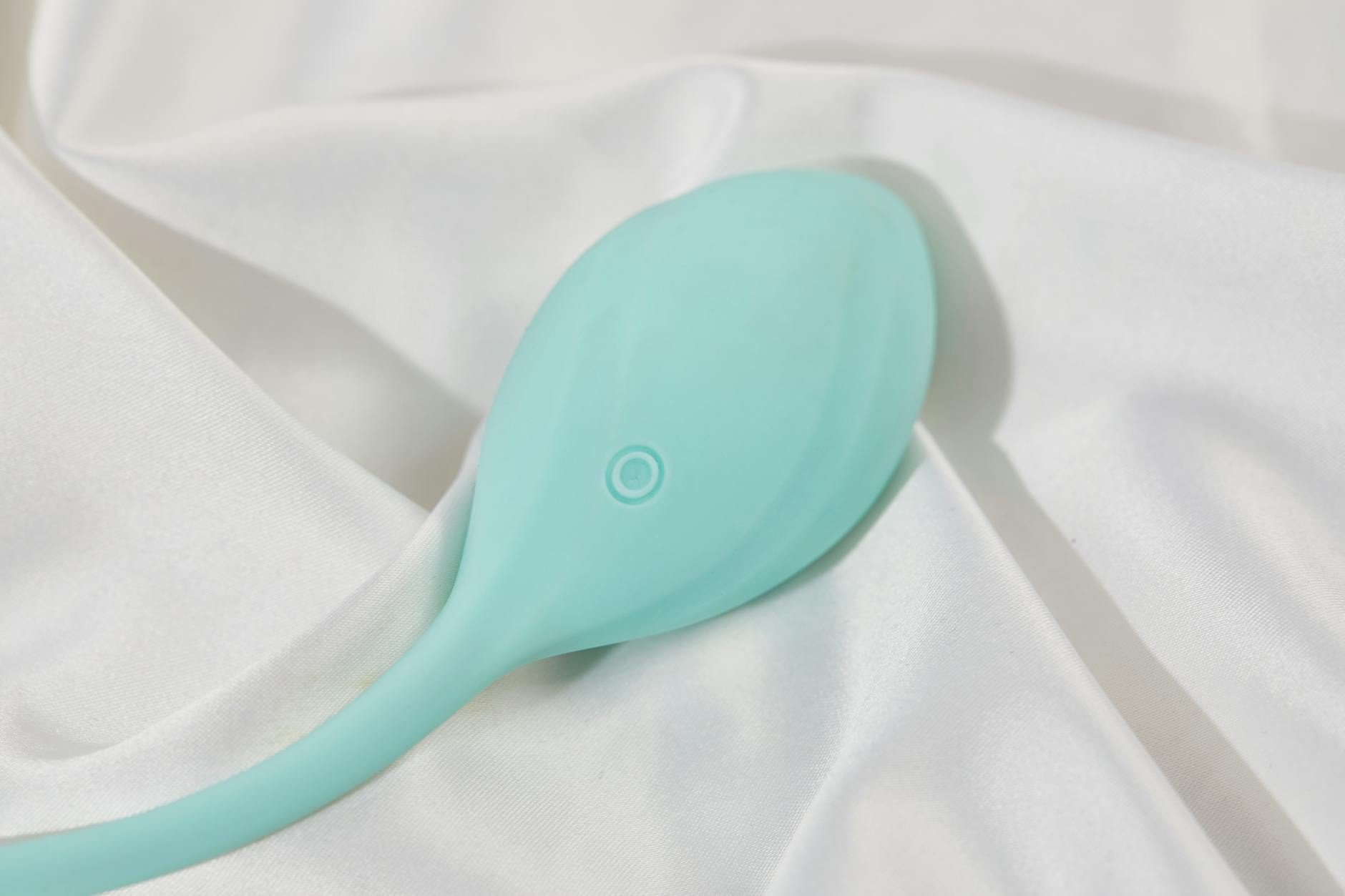
Photo by IFONNX Toys on Pexels
What actually helps: practical strategies
If you're on hormonal birth control and your lemon vibrator or any clitoral vibrator feels flat, here's what I tell people:
First, give yourself 3-4 weeks. Your body is still adjusting to the hormonal shift. Sensation sometimes rebounds once you're fully stabilized on the new hormonal baseline.
Second, extend your warm-up time deliberately. You're not broken. Your arousal curve has just steepened slightly. Budget 20-25 minutes for foreplay or solo play before you bring in the Lem. This isn't frustrating if you reframe it as permission to enjoy more buildup, not a bug.
Third, pay attention to timing within your pill pack. If you're on a traditional birth control pill with a placebo week, your hormone levels actually dip slightly during that week. Some people find their sensitivity bounces back then. Experiment. Track what you notice.
Fourth, try a different stimulation pattern. If the steady hum of a traditional vibrator feels muted, the suction sensation of a lemon clitoral vibrator often feels more pronounced because it's a fundamentally different type of stimulation. It doesn't rely on sensation intensity the same way. If you haven't tried a suction toy yet, this might be the right moment.
Fifth, use lubricant intentionally. It's not just about comfort. Good lubrication actually increases sensation by creating the right friction and allowing the toy to glide smoothly. Water-based lubricant works best with silicone toys. Use it generously.
When to check in with your doctor
If your sensitivity doesn't rebound after a month or two, or if numbness is paired with mood changes, pain, or complete loss of desire, talk to your prescriber. Not all birth control formulations work the same way for everyone. Some are known for lower side effects on sexual function than others.
Lower-dose pills, certain IUDs like the copper Paragard, or different progestin types might feel radically different. Switching formulations is a legitimate medical conversation. You're not complaining about nothing. Sexual function is part of overall health.
The truth about pleasure and birth control
Hormonal birth control can absolutely change pleasure. But change is not the same as loss. You haven't lost your capacity for orgasm. You haven't lost sensitivity permanently. You've shifted into a different neurological and physiological state that requires slightly different inputs.
Many people who've been on birth control for years report that their pleasure actually deepens over time as they learn their new normal. The rush of peak-cycle arousal might not be there anymore, but the steadier, more sustainable arousal that follows can be surprisingly rich.
Your lemon vibrator isn't the problem. Your body is recalibrating. That's not a failure. It's adaptation.
FAQ: Birth control and vibrator sensation
Can birth control permanently reduce clitoral sensitivity?
No. Clitoral nerve structure doesn't change from birth control. What changes is blood flow, hormonal signaling, and your nervous system's responsiveness to that signaling. Once you stop hormonal birth control, sensitivity typically returns to baseline within a few weeks to a few months. During use, sensitivity is reduced but not gone.
Does the copper IUD cause the same sensitivity loss as hormonal IUDs?
No, actually. The copper IUD (Paragard) doesn't release hormones, so it doesn't typically affect arousal or clitoral sensitivity the way hormonal methods do. If you're on a hormonal IUD like Kyleena or Mirena and experiencing significant sensation loss, switching to copper might feel noticeably different. That's a conversation worth having with your doctor.
Will switching birth control brands help?
Possibly. Different formulations have different hormone doses and types of progestin. A lower-dose pill or a different progestin type can feel remarkably different in terms of sexual function. It's absolutely worth asking your provider about options if your current method is affecting pleasure.
Is it normal to orgasm faster or slower on birth control?
Both are normal. Most commonly, people report needing more time to reach orgasm. But some people find they actually orgasm more easily on certain formulations because the hormonal stability reduces anxiety. Individual variation is huge here.
Should I stop taking birth control to get my sensitivity back?
That's between you and your doctor, but stopping birth control just to reclaim sexual sensation is rarely the answer. The solution is usually either adjusting your technique, changing formulations, or giving your body more time to adapt. If birth control is your best contraception method otherwise, there are almost always ways to work with it rather than against it.
Does lube actually help if birth control is the issue?
Yes. Lube helps in two ways. It increases comfort (important if hormonal changes made your tissue slightly drier), and it allows better glide and pressure sensation. That improved sensation often helps compensate for the reduced nerve responsiveness from hormonal birth control. Always use water-based with silicone toys.
Moving forward
Hormonal birth control changes pleasure. Knowing that, and knowing why, means you can stop blaming yourself or your partner or your lemon vibrator. Your body is responding exactly the way it should to a significant hormonal shift.
The good news is that none of this is permanent, and almost all of it is workable. Extended warm-up time, intentional lubrication, possibly a different toy or formulation, patience with your body's new rhythm. These aren't compromises. They're actually deeper engagement with your own pleasure.
Your sexuality didn't disappear. It just reorganized. And honestly, that reorganization often teaches you things about yourself that the old rhythm never showed you.
If you're struggling with this transition and want to explore it further, get in touch with us. We're here to help you navigate what your body is doing and find what works for you now.