
Let's talk about what anxiety actually does to your body
Here's the thing nobody explains clearly: anxiety doesn't just make you feel bad. It literally rewires how your nervous system responds to touch. When you're anxious, your sympathetic nervous system (fight-or-flight mode) takes the wheel. Blood flow redirects away from your genitals and toward your muscles. Your pelvic floor tightens. Lubrication stops. Your brain becomes hyperaware of every sensation instead of lost in pleasure.
You're not broken. Your nervous system is doing exactly what it's supposed to do: keeping you safe from perceived threat. The problem is that the threat isn't real. It's the voice in your head saying "What if I can't come?" or "What if my partner thinks this is weird?" or "What if something's wrong with me?"
And here's the part that matters for how you use lemon vibrators: anxiety thrives on uncertainty. It feeds on the slow build-up, the waiting, the wondering if it's going to work this time.
How clitoral vibrators interrupt the anxiety loop
Lemon vibrators, and clitoral vibrators in general, work differently than other stimulation because they provide rapid, consistent sensation that your nervous system can't overthink. Here's the neuroscience part without the jargon.
Your clitoris has about 8,000 nerve endings concentrated in a tiny area. When you use a lemon vibrator, you're sending a dense signal to your brain so quickly and so reliably that your anxious thoughts can't compete for attention. It's not that the vibration is magically calming. It's that your brain literally can't process both the intense physical sensation and the anxious narrative at the same time.
Think of it like this: your brain has bandwidth. Anxiety uses up about 70% of it, leaving 30% for arousal. A lemon clitoral vibrator commandeers so much of your attention that anxiety gets bumped down to 10%, and arousal gets the 90% it needs.
This is why some people find that manual stimulation doesn't help with anxiety-driven arousal issues, but a lem vibrator does. The consistency and intensity matter.
The reset your body needs
When you've had a pattern of anxiety during sex, your body builds a memory of it. You start anticipating the anxiety before it even happens. It becomes self-fulfilling. Your body tenses up in advance. Your breathing gets shallow. Your partner notices and gets anxious, which makes you more anxious.
Lemon vibrators can actually break that pattern because they create a new neural pathway. Instead of the sequence "anticipation → anxiety → shutdown", you get "anticipation → intense sensation → arousal → pleasure." After a few times of successfully reaching arousal or orgasm with a lemon vibrator, your body starts to believe that pleasure is possible.
This is called "reconditioning," and it's one of the few things that actually works for performance anxiety. Not breathing exercises, not meditation, not willpower. Repetition of success.
When you use a lem vibrator and it works, your nervous system registers that. Next time, your body doesn't brace for failure. It anticipates success instead.
Why starting solo matters
I know this is obvious advice, but I want to say it plainly: if anxiety is blocking your arousal, the best place to start is alone. Not because you're broken and need to "fix yourself" before your partner can touch you. But because you're removing an entire layer of performance pressure.
When a partner is present, part of your brain is monitoring their response, their timing, whether they're enjoying themselves, whether they're judging you. That observer voice is impossible to turn off through willpower alone. It needs to be distracted.
Using a lemon clitoral vibrator on your own, you get to find out what your actual arousal pattern is without the filter. You get to discover if it takes you longer than you thought, or if you prefer a certain pattern, or if you actually prefer solo stimulation to partnered touch for a while.
That information is gold. It's the difference between guessing what you need and knowing.
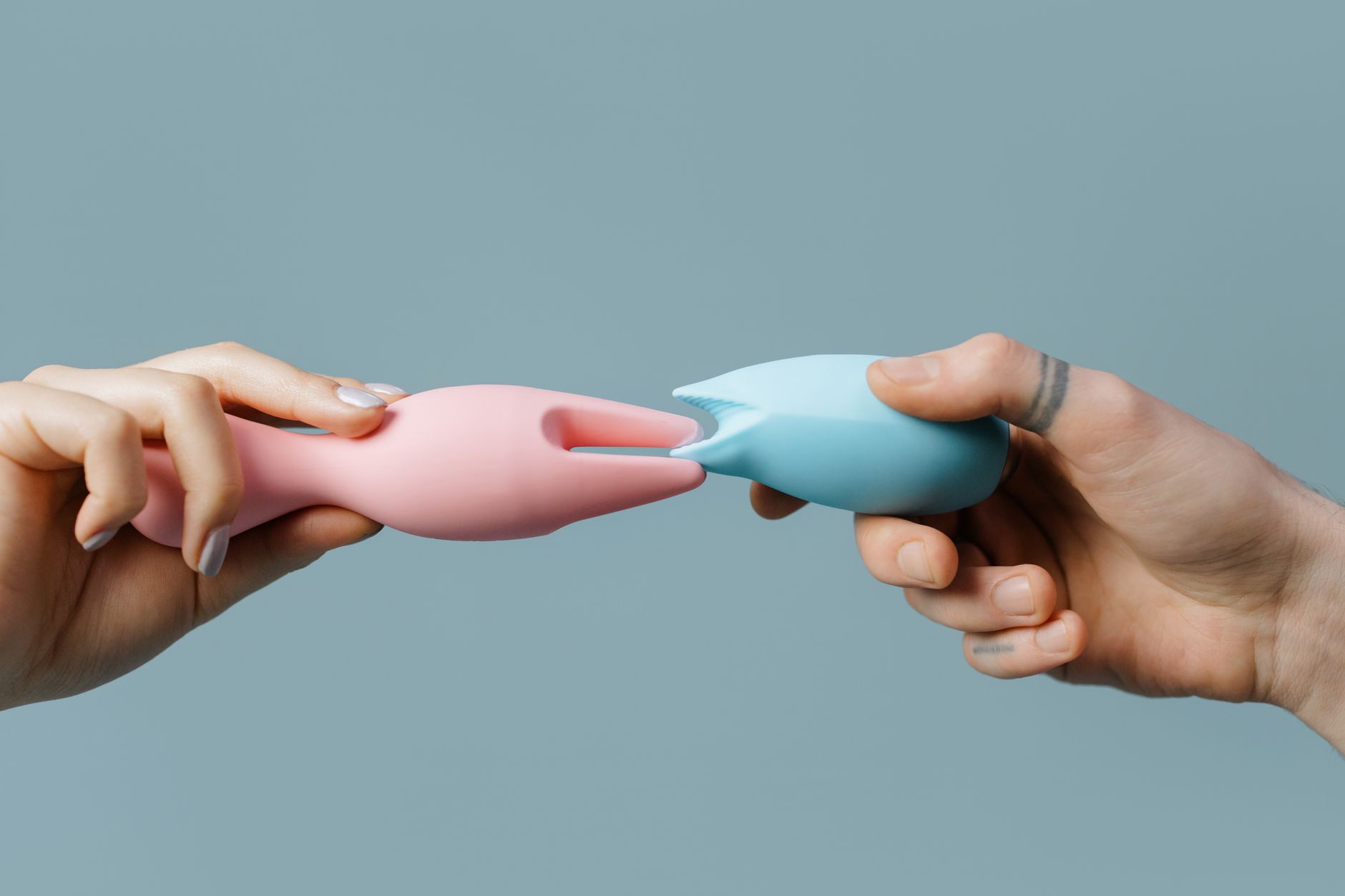
Photo by cottonbro studio on Pexels
The conversation with your partner
If you have a partner, at some point you'll want to involve them. The conversation matters more than you think. It's not "I have anxiety so I need this." It's "I want to figure out what feels good for me, and this is helping me do that. I'd love to share it with you eventually, but I'm going to start alone."
That frame does two things. It makes it clear that the lemon vibrator isn't a substitute for them. It's a tool for your own pleasure. And it gives you permission to take as long as you need without feeling like you're withholding something from them.
When you do eventually use a lemon vibrator with a partner present, the anxiety often doesn't return the same way because you've already proven to yourself that arousal is possible. Your nervous system has a new baseline. It's not "Can I do this?" It's "I know I can do this. Here's what I like."
That shift changes everything.
A word on the physical setup
Three things matter when you're using a lemon vibrator to work through anxiety. First, comfort. You need to be somewhere you won't be interrupted, where you feel physically safe, and where the temperature and light are exactly how you like them. Anxiety loves an excuse to activate. Don't give it one.
Second, lube. Even if you don't usually need it, use it anyway. Lube reduces friction and makes the sensation feel less intense, which paradoxically makes it easier to relax into. It also sends a signal to your body that you're taking this seriously and taking care of yourself.
Third, no deadline. Set aside time when you have nowhere to be for at least 30 minutes. Anxiety loves a clock. When you know you have time, your nervous system actually settles down faster.
Start with your lemon vibrator on a lower setting. You're not trying to reach orgasm (though that might happen). You're trying to notice sensation without judgment. That's it. Just notice. That noticing is the foundation of everything.
The timeline looks different for everyone
Some people use a lemon clitoral vibrator a few times and suddenly they're back online. Their nervous system recalibrates fast. Others need weeks of consistent solo use before they feel ready to involve a partner. There's no "right" timeline. Anxiety is stored in your nervous system, and your nervous system has its own pace.
What matters is consistency. Using a lem vibrator once and expecting anxiety to disappear won't work. But using it twice a week for four weeks almost always shifts something. Your body starts to trust the sensation. Your anticipatory anxiety decreases. You have actual evidence that arousal is possible.
This is true whether you have performance anxiety, partner-specific anxiety, or general anxiety that spills into sex. The nervous system doesn't distinguish. The fix is the same: consistent exposure to reliable pleasure.
When to talk to someone
If anxiety is severe, if it's connected to trauma, or if it's not improving after a few weeks of solo exploration with a lemon vibrator, talking to a therapist who specializes in sexual health is worth it. A good therapist won't tell you that you need to just relax or that it's all in your head. They'll work with your nervous system.
And here's what matters: using a lemon vibrator isn't incompatible with therapy. It's actually one of the most useful things you can do alongside therapy. You're gathering real data about your body. You're building new neural pathways. You're proving to yourself that pleasure is possible. That's the foundation that therapy builds on.
The thing about rebuilding confidence
Anxiety erodes confidence. It tells you a story that something's wrong with you. Each time you can't access arousal, the story gets louder. Each time you tense up before sex starts, you're reinforcing it.
Using a lemon vibrator is one of the fastest ways to interrupt that story because it gives you concrete, repeatable evidence that the story isn't true. You can access arousal. Your body does respond. You do deserve pleasure.
That's not a mindset shift. That's a nervous system reset.
People also ask
Can anxiety make you unable to orgasm even with a vibrator?
Yes, in the moment. But here's the thing: the vibrator itself often helps override the anxiety enough that orgasm becomes possible. The key is that you're not trying to relax into arousal (which is hard when you're anxious). You're giving your nervous system something so intense to focus on that the anxiety gets backgrounded. If you use a lemon vibrator and still can't reach orgasm after a few weeks of consistent practice, that might be a sign to talk to a therapist about the anxiety specifically, because it may need more support than stimulation alone can provide.
Should I use a lemon vibrator with my partner if I have sexual anxiety?
Not immediately. Solo use first. When you're alone, you have zero performance pressure, which is exactly what your nervous system needs to recalibrate. Once you've had several successful experiences alone, you'll have evidence in your body that arousal is possible. That evidence changes how your nervous system responds when your partner is present. Then introducing a lem vibrator together is actually way easier because you're not also managing the anxiety of "Will this work?"
How long does it take for anxiety to stop blocking arousal?
It varies, but most people notice a shift within two to four weeks of consistent use. Your nervous system is pretty plastic. It rewires faster than you think when you give it a new, positive experience on repeat. That said, if you've had anxiety around sex for years, give yourself more than a month. You're not broken. You're just retraining your nervous system.
Can I use a lemon clitoral vibrator if I'm also taking antidepressants?
Yes. Antidepressants can sometimes affect sensation or orgasm, but that's separate from anxiety-driven arousal issues. A lemon vibrator can actually be more helpful if you're on medication that's made sensation less intense because the stimulation is so consistent and strong. If the medication itself is numbing your arousal, that's a conversation for your doctor. But if it's anxiety that's the blocker, a lem vibrator still works.
Is using a vibrator a crutch if I have sexual anxiety?
No. It's a tool. You wouldn't ask someone who needs glasses if they're using eyeglasses as a "crutch." Your nervous system needs support to recalibrate. A lemon vibrator provides that support. Once your nervous system has built new pathways, you might find you need it less. Or you might find you just really like it, and that's fine too. Either way, it's not a dependency. It's a bridge.
What if my partner feels threatened by my use of a vibrator?
That's a separate conversation from the anxiety work. A lem vibrator isn't a replacement for partnered sex. It's a tool for your own pleasure and nervous system regulation. But if your partner is struggling with insecurity about it, that's actually something to address together, ideally with a couples therapist. His anxiety about the vibrator isn't the same as your anxiety during sex, but it's worth untangling. You deserve support, and he probably deserves some reassurance too.
You're not broken, just dysregulated
Sexual anxiety isn't a flaw. It's your nervous system being hypervigilant. That makes sense. It happens to a lot of people, especially if you've had negative sexual experiences or if you grew up with messaging that sex is dangerous or shameful. Your nervous system is trying to protect you.
But you don't need protection anymore. You need permission. A lemon vibrator gives your body a new experience: the experience of pleasure being accessible, reliable, and safe. That's not magic. That's neuroscience. And once your nervous system has evidence that pleasure is possible, everything shifts.
Start solo. Be patient with yourself. Use a lem vibrator consistently. Watch what happens to your body, your confidence, and your arousal when you remove the pressure. That's the work.
If you want to explore this further or need guidance on how to talk with a partner about anxiety and pleasure, reach out to our team. We're here to help.